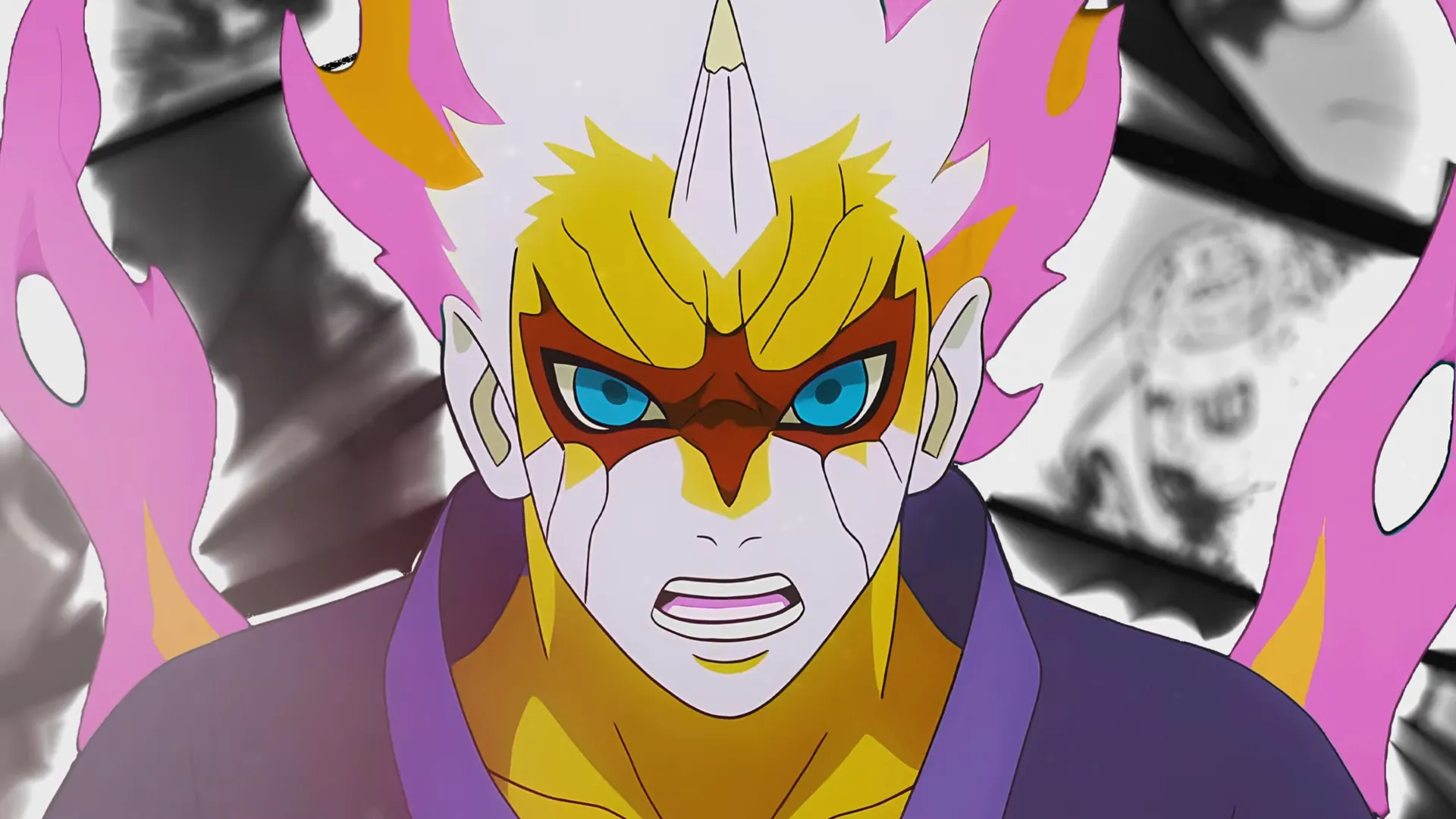
Why Jura Will Side with Boruto and the Hidden Leaf: A Deep Analysis
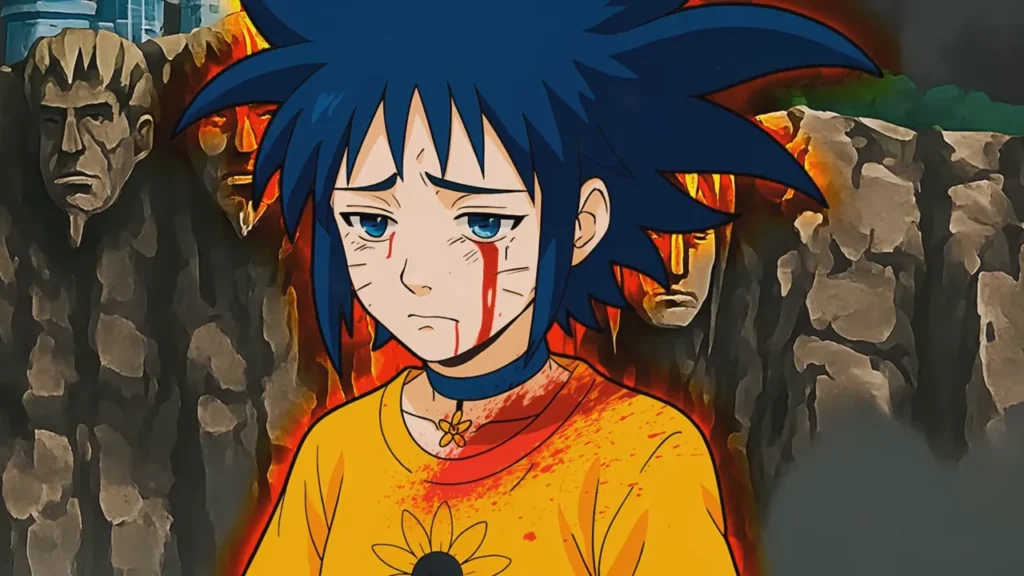
Why Jura Will Join Boruto & Himawari
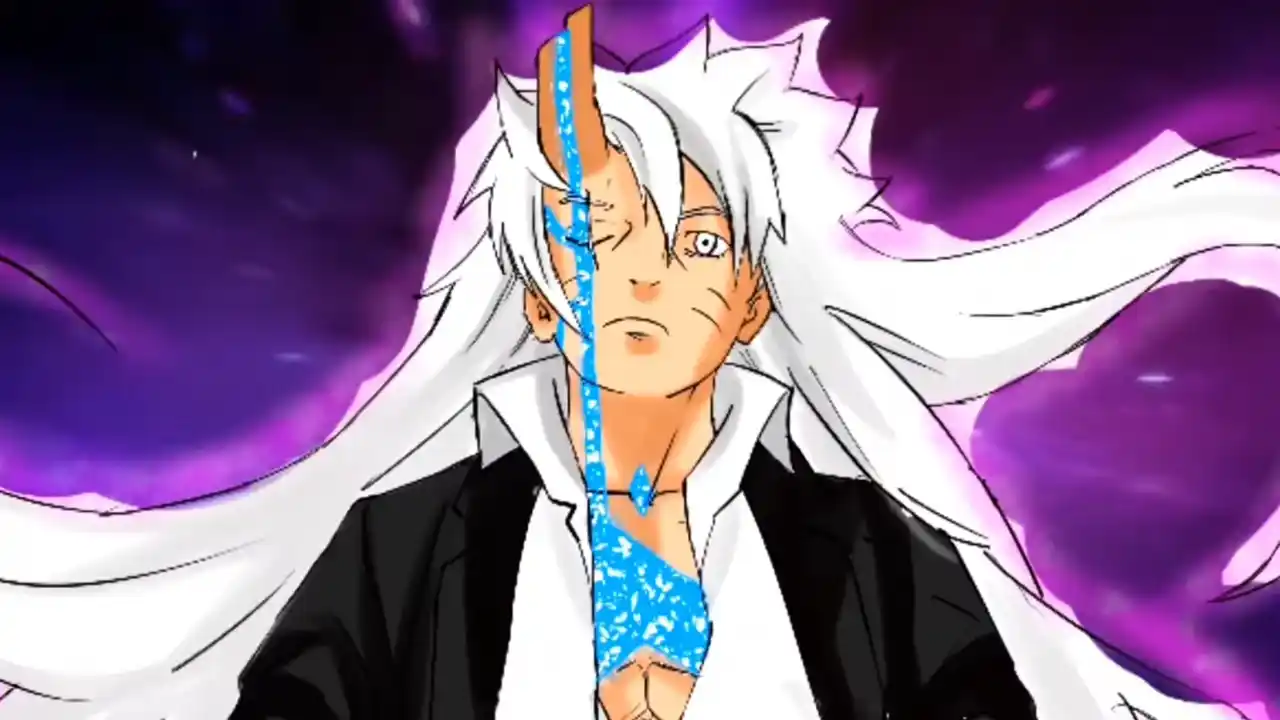
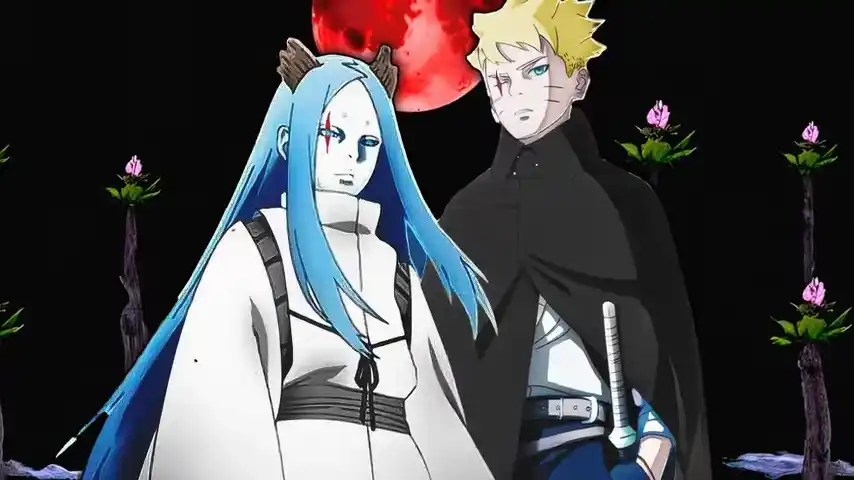
Jura is the key to this brand-new power hierarchy in Boruto Two Blue Vortex, and there’s no way he’s going out with some pointless death. I’m convinced he’ll eventually side with Boruto and the Hidden Leaf in upcoming chapters. I know that sounds like a bold claim, and it’s probably going to spark a ton of debate, but hear me out.
I’m going to connect all the dots into one logical picture. This is a deliberate story move, meant to massively boost Konoha’s strength before the real, full-scale threat makes its move: the main Otsutsuki clan. I’m telling you, this could completely flip how we understand Boruto’s story, so stick with me until the end.
The Evolutionary Ladder: From Chaos to Consciousness
To really understand Jura, you have to start at the beginning with the strongest creature in the universe: the Ten-Tails. In Naruto, it’s portrayed as raw, untamed natural energy. No mind, no ego, nothing but primal hunger. It’s pure instinct, just unconscious desire demanding immediate satisfaction.
The new chapters of Boruto brilliantly expand on that concept through the Clawed Grimes. These creatures, fragments of the juvenile Ten-Tails, act purely on blind instinct. They attack anything that moves, desperately and unconsciously hoping to stumble across an Otsutsuki. Most of the time, they’re wrong, and they end up tearing into regular people. To me, this instantly brought up parallels with Attack on Titan. Just like the brainless Titans devouring humans in hopes of randomly eating one of the Nine Shifters and regaining their humanity, the comparison fits perfectly.
The Ten-Tails isn’t a thinking being. It’s chaotic, hungry energy, the primordial soup of the universe. So how do you get something like the Otsutsuki out of that chaos? My theory, inspired by evolutionary biology, is that the Ten-Tails is a proto-lifeform, the raw foundation from which the Otsutsuki eventually evolved.
Most likely, when the Ten-Tails absorbs enough planetary chakra and energy, it hits a critical mass that triggers a qualitative shift, producing a conscious being: an Otsutsuki. Think of how, on Earth, single-celled organisms started absorbing one another, leading to the rise of complex multicellular life.
The Freudian Framework
If the Ten-Tails is the Id, then the Otsutsuki are the next logical step: Freud’s Ego. The Ego is the rational, conscious part of the psyche, trying to fulfill the Id’s desires in calculated, socially acceptable ways. And in their case, it’s through clan hierarchies and planetary-scale strategies.
The Otsutsuki are undeniably intelligent. They plan centuries ahead, handpick worlds, cultivate God Trees, and consume chakra fruit in carefully thought-out steps to push their evolution forward. But their intellect has limits. For all their sophistication, they’re still driven by one primal urge: the hunger for power and eternal life through absorption.
Momoshiki is the clearest example. They’re not chasing self-awareness, spiritual enlightenment, or creativity. Their only goal is endless power-ups. Take Isshiki: cunning, manipulative, always playing the long game, but at the end of the day, his ultimate goal was as primitive as the Ten-Tails itself: grow a chakra fruit and eat it.
That makes the Otsutsuki more like “intelligent predators.” Like a pack of hyenas, they can coordinate, use strategy, and outthink prey, but they’re still stuck inside that same survival loop. They embody stagnation.
The Shinju: Evolution’s Apex
And this is where Boruto Two Blue Vortex Manga hits us with its wildest revelation yet: the Shinju. Created by Code from Ten-Tails fragments using Shibai Otsutsuki’s Shinjutsu (as explored in detail in this comprehensive analysis of the Otsutsuki-Shinju connection), they’re the apex of that entire evolutionary chain. They show a level of intelligence, self-awareness, and emotional depth the Otsutsuki never even came close to.
The Shinju are Freud’s Super-Ego: the moral, ethical, reflective part of the mind, chasing ideals and deeper meaning. The best example? Their leader, Jura.
He doesn’t just want to absorb Himawari because she carries Kurama’s chakra. He wants to understand why he feels this overpowering pull toward her. His actions aren’t only instinct-driven; they come from genuine scientific curiosity, a need to understand himself and his place in the universe. The way he grasped the concept of love through the emotions Matsuri passed to him proves how quickly he processes and embraces human feelings.
The contrast with the Otsutsuki is mind-blowing. Momoshiki or Isshiki would never stop to question their motives or care about someone else’s emotions. For them, it’s all about the goal. But Jura, as the manga shows us, actually reflects on his mission. He even refuses to kill Boruto because it doesn’t line up with his greater purpose: the pursuit of knowledge.
The Shinju aren’t just chasing strength. They’re asking the biggest questions: Who are we? Why do we exist? What’s our purpose? What are humans? What does it mean to love?
A Return to Complex Villains
One of the biggest shifts from Naruto to Boruto is how villains are written. In Naruto, antagonists had deep backstories that shaped their humanity. We felt for Nagato, understood Obito, and saw the tragedy of Madara. In Boruto, villains often feel flatter: “evil for the sake of evil.”
But Jura? He’s a return to complexity, only on a completely different philosophical level. His humanity isn’t revealed through some tragic backstory. It comes through his actions and questions.
Rebellion Against Being a Tool
The central theme of Jura’s character is rebellion against his role as a “tool.” That theme has been woven into the Naruto universe forever. Shinobi being called tools of their villages, of their feudal lords. Tailed Beasts were always weapons in the hands of shinobi. The Ten-Tails was just a weapon for the Otsutsuki.
Jura is the ultimate breaking point of that cycle. His rebellion isn’t just against others’ expectations; it’s against his very nature. He was created as a mindless weapon, but he developed a will of his own. That makes his rebellion existential.
His “human” traits come through in several key ways:
Creation instead of destruction. Unlike the Clawed Grimes that mindlessly consume, Jura creates. He spawns new Shinju, gives them names (Hidari, Matsuri, Mamushi), and guides them toward finding purpose. This isn’t reproduction; it’s closer to forming a family, a clan, leaving behind a legacy. He acts like a parent helping his children discover their own paths. That’s a massive break from the “consume and destroy” program.
The pursuit of knowledge. His interest in Naruto, and later Himawari, isn’t just hunger. Naruto wasn’t just the Ten-Tails jinchuriki; he was the man who held all Nine Tailed Beasts and still found a way to bond with them as individuals, not just weapons. For Jura, a humanoid Ten-Tails himself, Naruto was living proof that destructive power can be transformed into harmony. By absorbing Naruto, Jura hoped to understand how to achieve that same balance.
Himawari as the next step. She didn’t just inherit Kurama’s chakra; she was born with it. She’s something new entirely: a human Bijuu. Her synchronization with Kurama is higher than Naruto’s ever was. They share one chakra. For Jura, this is like a scientist witnessing the next stage of evolution. His fascination is almost familial. He wants to understand how power transfers, shifts, and builds new identities. He even admitted Himawari is closer to him by nature than she is to other humans.
Rational fear. His view of Boruto isn’t the arrogant superiority of an Otsutsuki. After seeing Boruto nearly erase Hidari with a single strike, Jura realized Boruto poses an existential threat to his species. He didn’t rush in recklessly; he chose a calculated approach: remove the threat quietly, or face him directly only if necessary. That’s fear, but not for himself. It’s fear for his new clan’s survival.
The Perfect Candidate for Talk no Jutsu
Now here’s the kicker: all of these traits (curiosity, creativity, self-reflection) make Jura the perfect candidate for the legendary “Talk no Jutsu.” But this won’t be the same as Nagato or Obito. Jura won’t be swayed by speeches about friendship or forgiveness. His turning point will be rooted in logic and philosophy.
Here’s how I see it going down: In the final battle, Jura corners Himawari, ready to consume her to finally get his answers. Boruto and Kawaki can’t stop him. But then something unexpected happens.
Himawari, through her unique connection to Jura, starts a mental dialogue with him: a Bijuu-to-Shinju exchange. She won’t beg for her life. Instead, she’ll hit him with a question that cuts straight to the core of his new consciousness:
“What will you study once humanity is gone, the most unpredictable, complex phenomenon in the universe? Where will you find new emotions, new knowledge, new variables? What’s the point of all this then?”
She’ll explain that human bonds (love, hate, sacrifice) aren’t weaknesses but unknown variables that spawn unpredictable strength and evolution. These are data points he can’t get by consuming life. Wipe out humanity, and he ends his own quest for knowledge. His victory would actually be his greatest defeat, locking him into the same eternal stagnation that trapped the Otsutsuki.
That, to me, would be one of the most powerful moments in Boruto. The unstoppable, hyper-logical Jura faced with a paradox his own logic can’t resolve and forced to stop.
The Pragmatic Alliance
His decision won’t be emotional. He won’t suddenly become a “good guy.” He’ll strike a pragmatic deal. His words might sound like this:
“You’re right. Humanity is the most complex phenomenon I’ve ever encountered. The Otsutsuki represent stagnation, an end to evolution. I seek its continuation. So I’ll help you defeat them. In return, you’ll be my subject of study, my partner in symbiosis. We’ll live and evolve together.”
And just like that, Konoha gains an ally unlike any other. Jura and the Shinju, beings with Otsutsuki-level power but unique abilities, become a controlled, living arsenal for the village. It elegantly solves the scaling problem, where only Boruto and Kawaki could keep up with god-tier threats. Now Konoha has divine power of its own.
The Living Library of Otsutsuki History
Jura becoming an ally becomes even more significant when you remember one thing: he isn’t just a newborn creature. He’s the embodiment of the Ten-Tails, which has existed on Earth for millennia. That means he might carry memory. He’s a witness to centuries.
Just imagine it (chills down my spine): Jura could have seen Kaguya and Isshiki’s arrival. He might know their plans, their conflicts. He could have witnessed Momoshiki and Kinshiki. And most intriguing of all, he might know the truth about the two Otsutsuki whose symbols were destroyed in Isshiki’s dimension.
Jura might be the only being who knows the entire history of the Otsutsuki on Earth. His knowledge could unlock the greatest mysteries:
Who was Shibai really? How did he ascend to godhood? The remains of Shibai: fans debate if that massive eye was where Isshiki kept the Ten-Tails, or something else entirely. My bet? Code brought Shibai’s remains and handed them off to Amado. The full implications of Amado’s connection to Shibai’s technology and his hidden agenda are examined in our deep dive into Amado’s master plan. That would explain how Amado has such absurd, almost divine understanding of Otsutsuki tech. He literally held god’s code in his hands.
The origin of Senjutsu. What if “natural energy” is actually Shibai’s residual energy, saturating the planet after his ascension? That would explain the prophetic dreams of the Great Toad Sage, Hagoromo’s transformation into the Sage of Six Paths, and even why Boruto’s Uzuhiko taps into the planet’s rotational energy. He’s instinctively linking into that divine source.
By joining Konoha, Jura wouldn’t just be another powerhouse. He’d be a living library, the key to all the hidden truths. That’s why he’s so obsessed with the Leaf’s library, cross-referencing shinobi history with his own memories to piece together the full picture of the world.
A Philosophical Revolution
So the Shinju arc isn’t just about a battle. It’s a philosophical story about evolution, consciousness, and finding one’s place in the universe. Jura isn’t a villain to defeat; he’s a game-changing character meant to rewrite the rules and prepare the shinobi world for the ultimate, final war against the true gods: the Otsutsuki clan.
And before we wrap, don’t forget to check out my second channel, NUKIO! Even after Boruto’s story ends, I’ll still be dropping fresh takes on anime, manga, and movies so you never miss out. Link’s in the description.
So what do you think? Do you agree with this evolutionary model? Do you believe Jura could really become an ally to the Hidden Leaf? What secrets do you think he’s hiding in his memories? And what role do you think Amado will play in all of this? Drop your theories and predictions in the comments below! Let’s piece together these insane mysteries of the Naruto and Boruto Manga universe.