Boruto Two Blue Vortex Chapter 26 Those Like Minded – Read Manga Online In High Quality
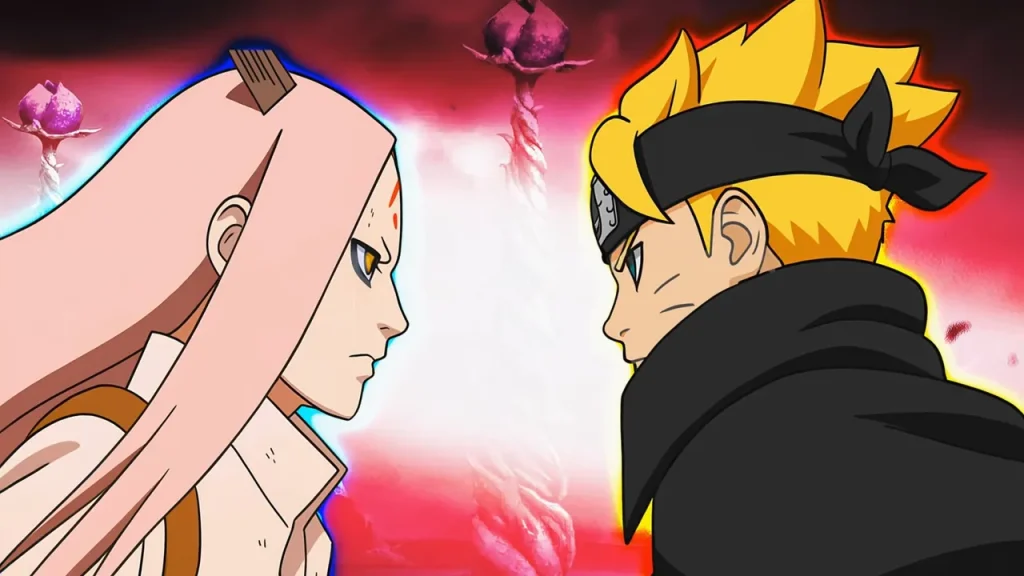
Boruto Naruto Next Generations 106
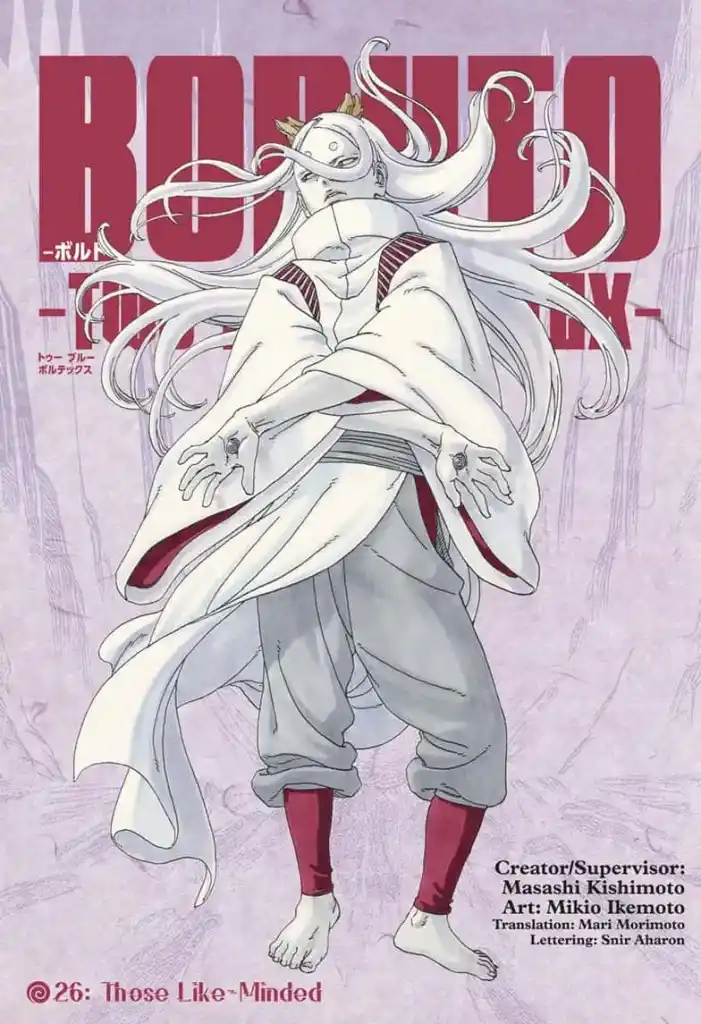
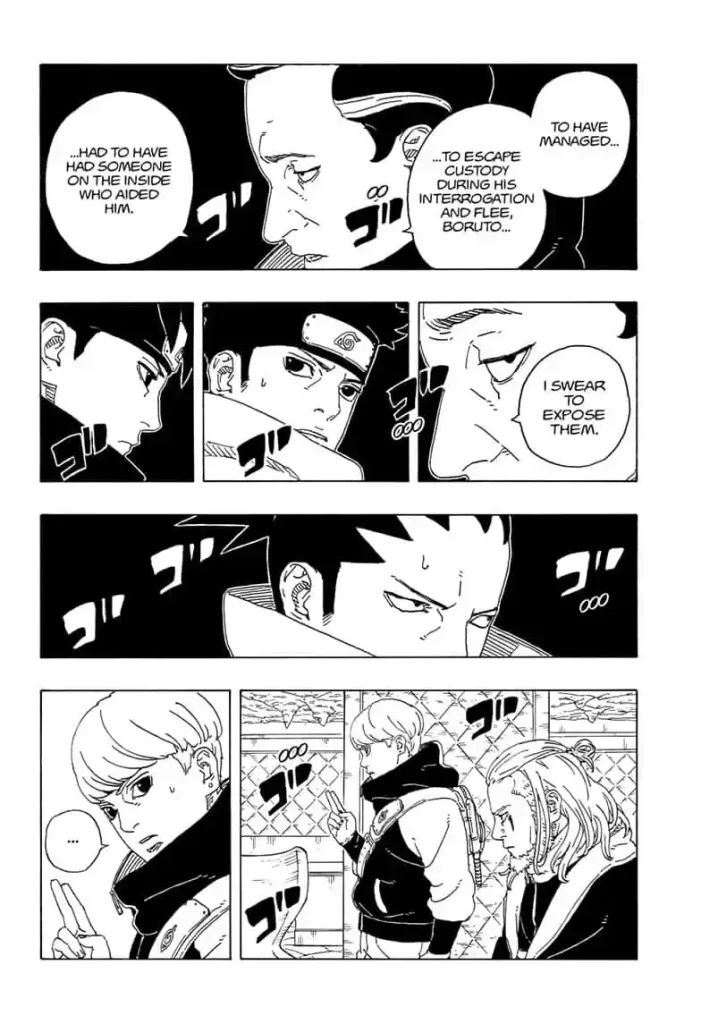
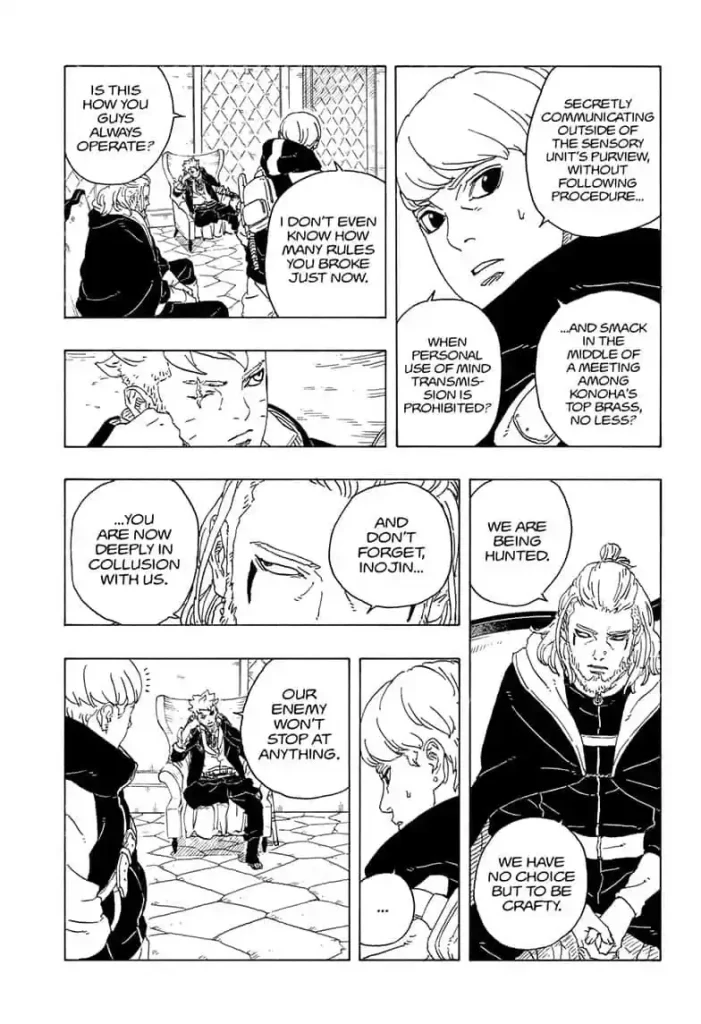
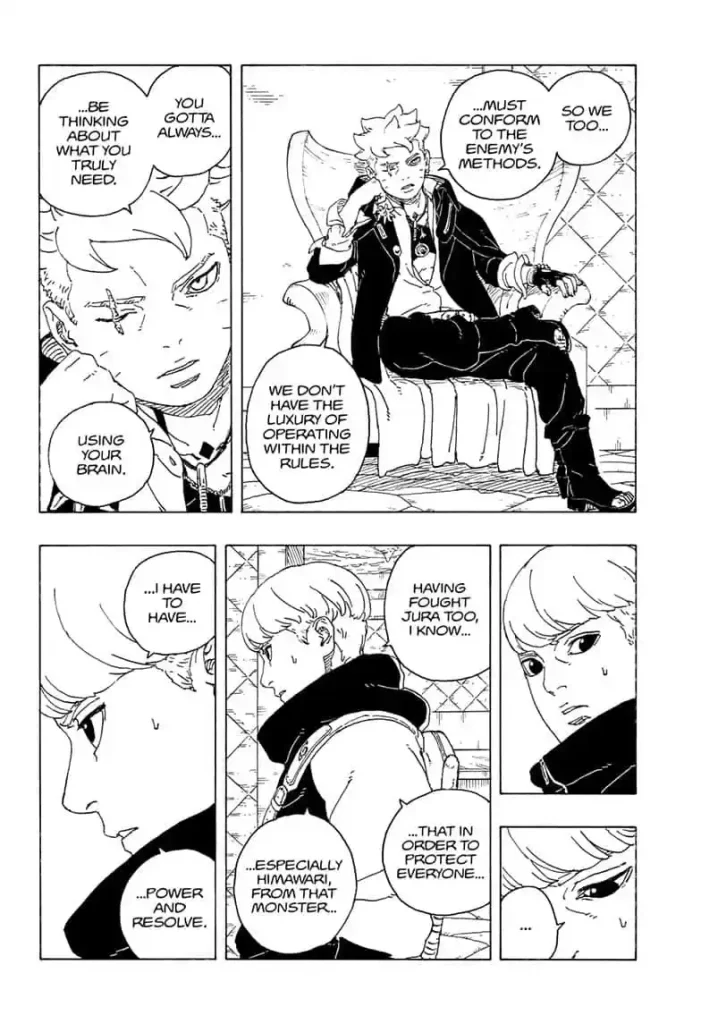
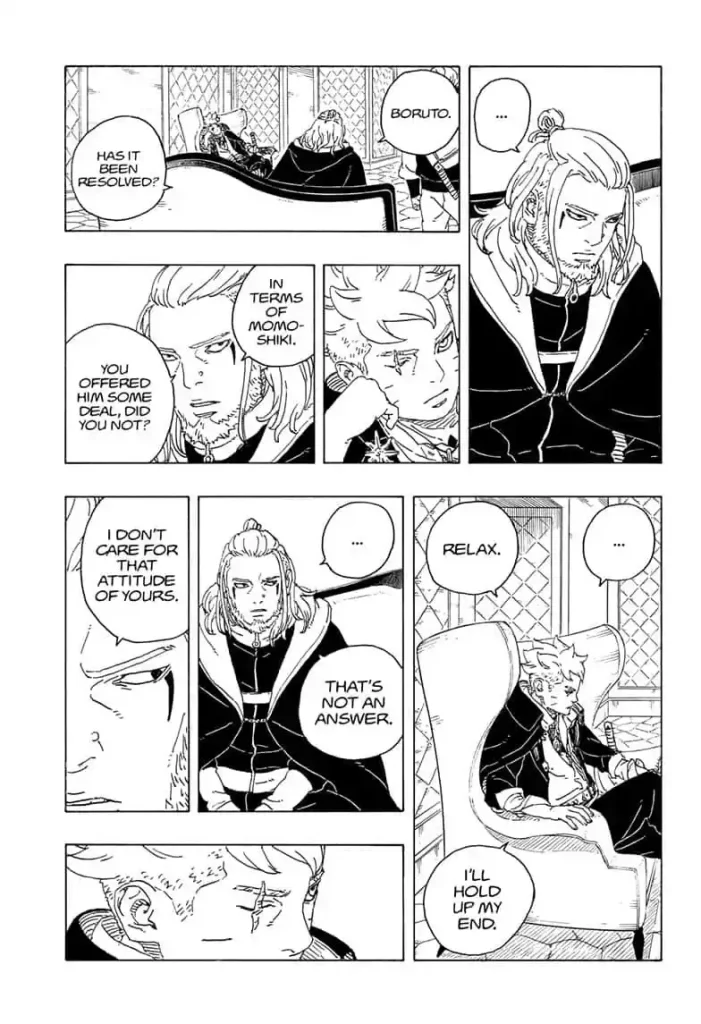
Boruto Manga Chapter 26 Review
Boruto Two Blue Vortex Chapter 26: The Calm Before the Storm – Complete Analysis and Breakdown
Chapter 26 of Boruto Two Blue Vortex didn’t just raise the stakes—it tears the floor out from underneath the story itself. This pivotal chapter delivers multiple game-changing moments that could reshape the shinobi world forever. Inojin has betrayed his village for the sake of protecting Himawari, the feudal lord is one step away from cutting Konoha’s lifeline by defunding it, Damon is turning his sights onto Sarada, and Mamushi is stalking Ada like prey, giving off disturbing vibes in the process.
Every thread in this chapter feels like it’s about to snap, and when it does, the fallout could be catastrophic. Let’s dive deep into the chaos that is Boruto Two Blue Vortex Chapter 26.
The Sweet Beginning: Inojin and Himawari’s Moment
A Gift That Says Everything
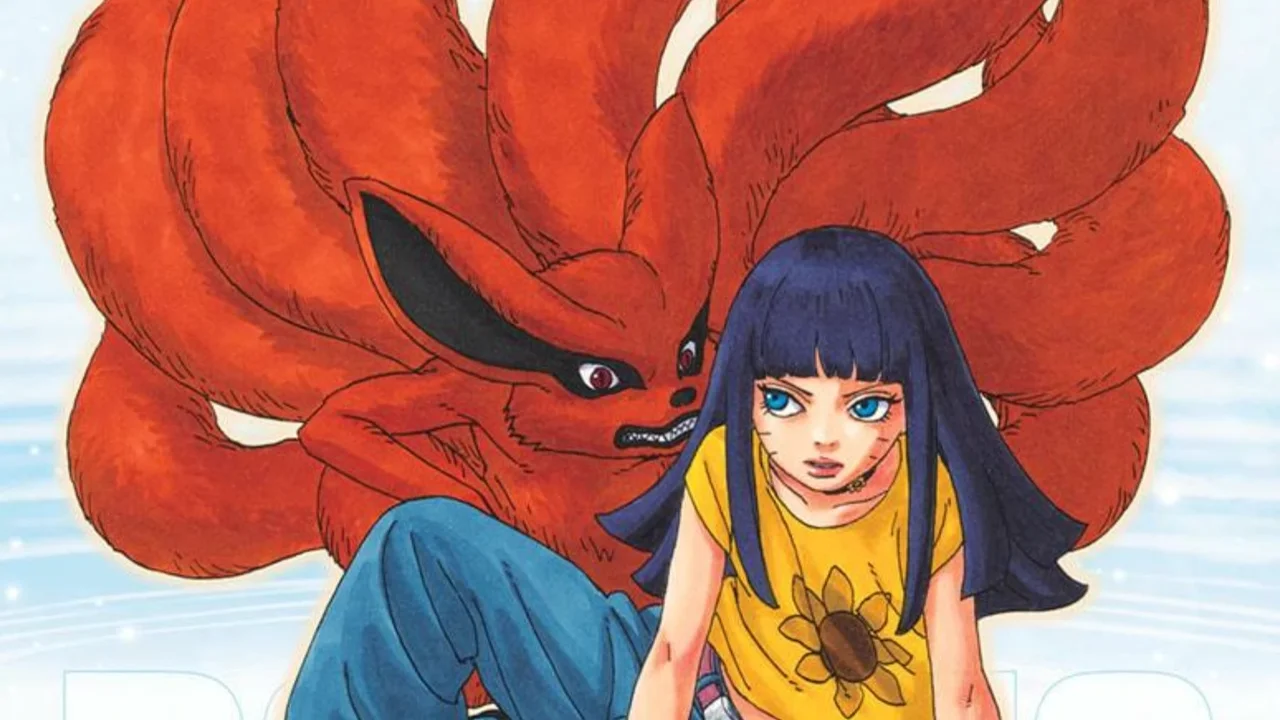
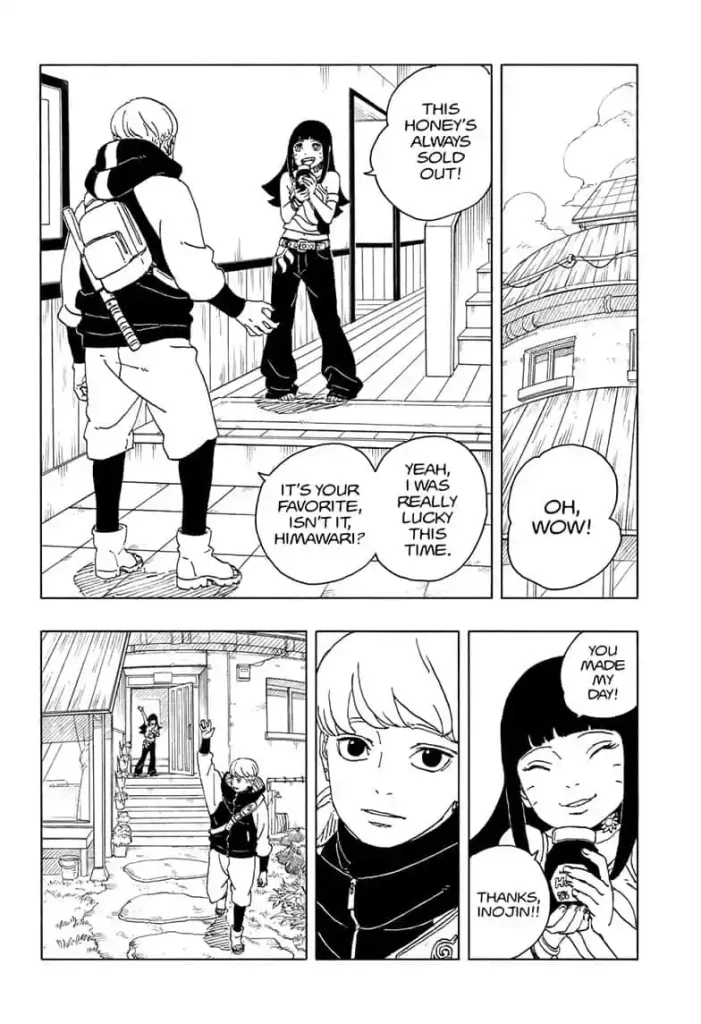
The chapter opens with Inojin at the Uzumaki household, presenting Himawari with what appears to be a jar of expensive and hard-to-find sunflower honey—Himawari’s favorite type, which cleverly plays on her name meaning sunflower. As she smiles at this thoughtful gift, we’re reminded that for the last three years, she’s been living alone.
Like many Japanese children in similar situations where house care and cooking become their primary focus, we see a small thrill in Himawari having her wants taken care of by someone close to her. Inojin has paid extremely close attention to her needs, even pausing after mentioning it’s an expensive gift that required effort. His suspect line about a “hard to find item being on sale” adds an intriguing layer to this tender exchange.
The Calm Before the Storm
This soft, tender moment between the two characters represents everything beautiful about innocent teenage romantic undertones between the 15-year-old Inojin and 13-year-old Himawari. However, this sweetness is merely the calm before an approaching storm.
Kashin Koji’s Intervention: The Toad’s Question
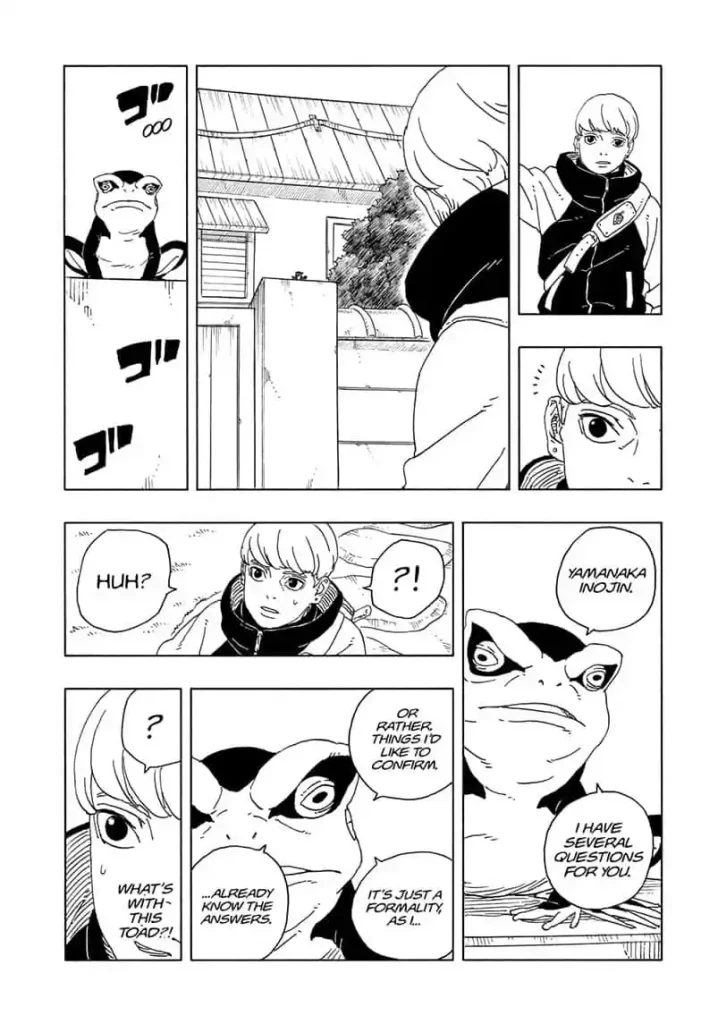
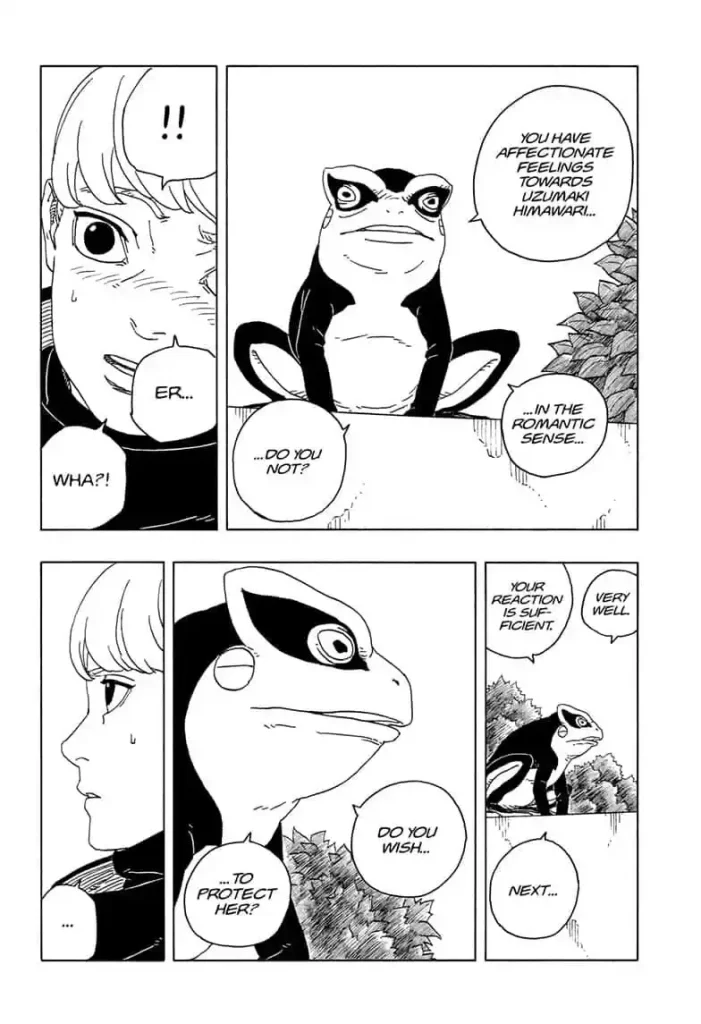
The peaceful moment quickly takes a dramatic turn when Kashin Koji’s toad appears, looking down at Inojin and cutting right to the chase by asking if he likes Himawari. This direct question causes Inojin to blush despite initially pausing and saying no—contradictory actions that the toad immediately picks up on.
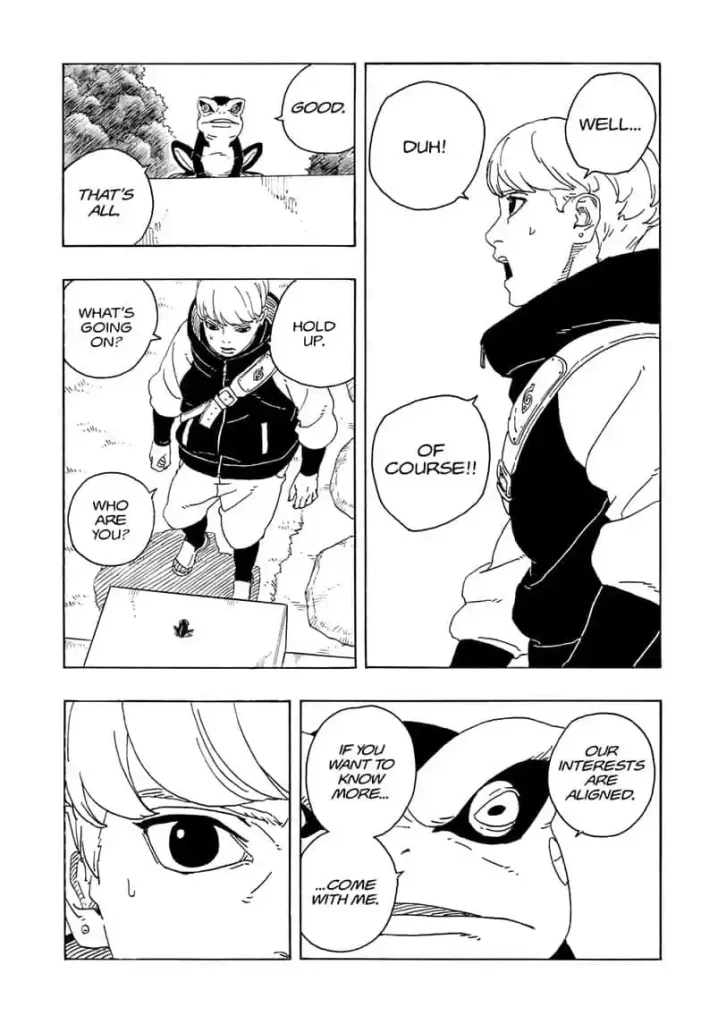
Using this confirmation, the toad delivers a pivotal message: “If you want to protect Himawari, you’ve got to come with me.” This moment marks the beginning of Inojin’s transformation from innocent teenager to reluctant conspirator. For more on the symbolism and character arcs unfolding with Himawari, especially in Chapter 26’s softer moments, see Boruto Two Blue Vortex Chapter 26 Spoilers where we break down hidden meanings and themes.
The Hideout Confrontation: Meeting Kashin Koji
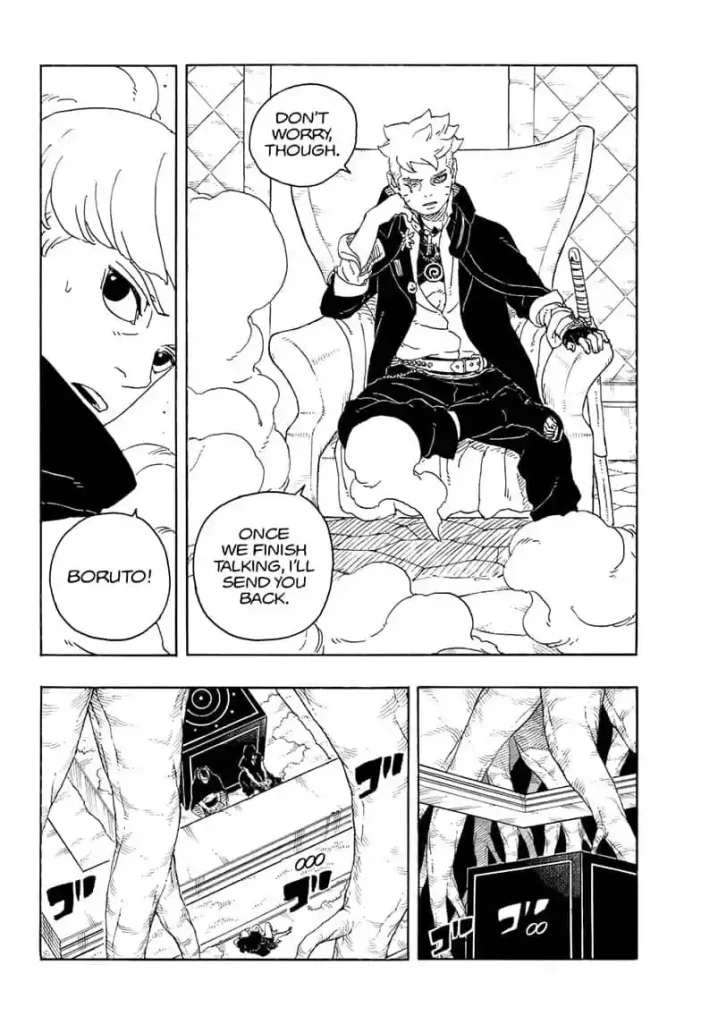
Boruto’s Intimidating Presence
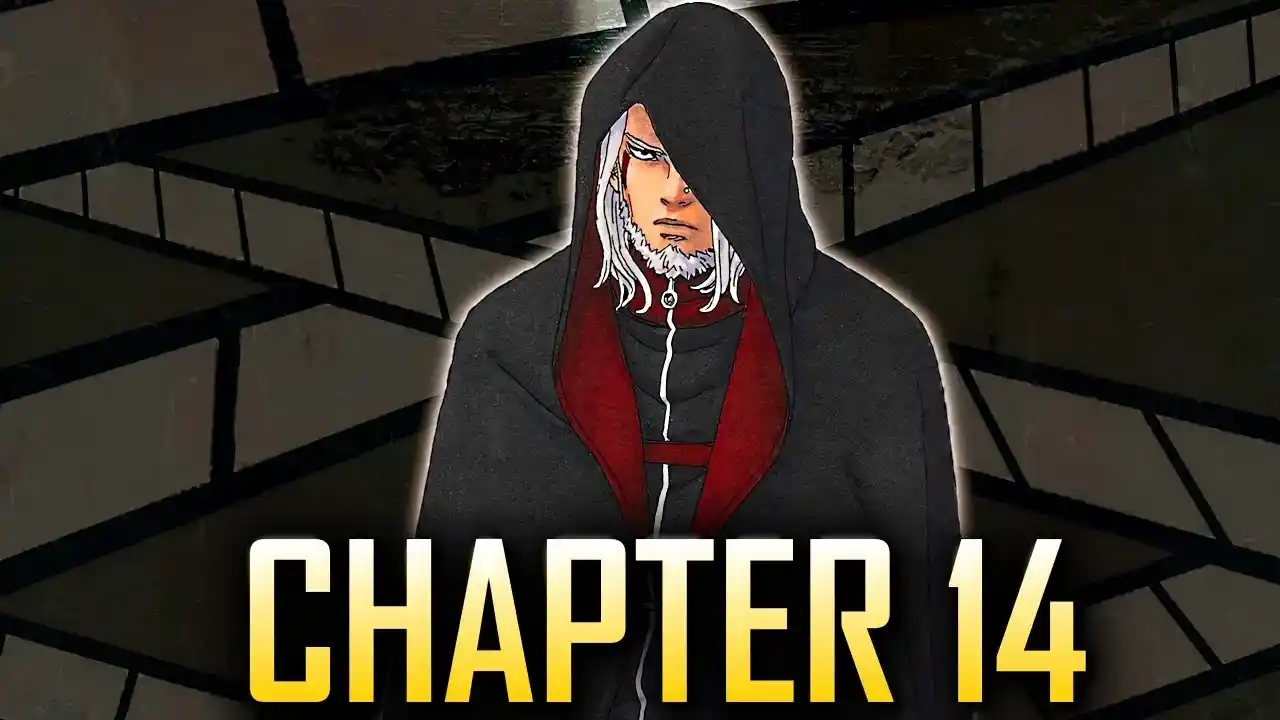
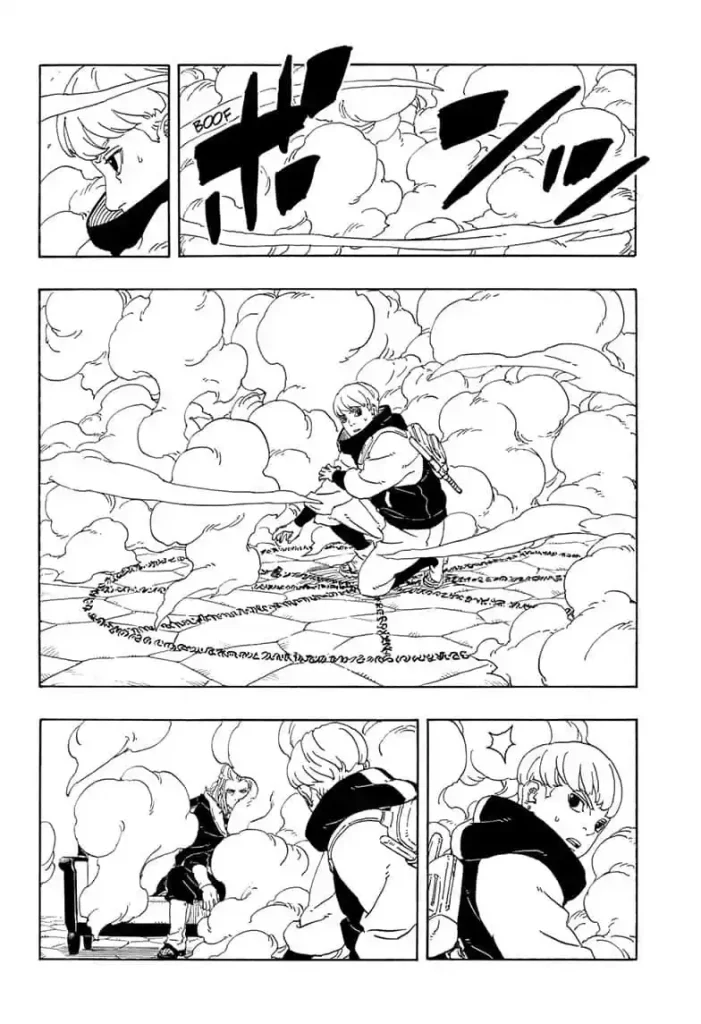
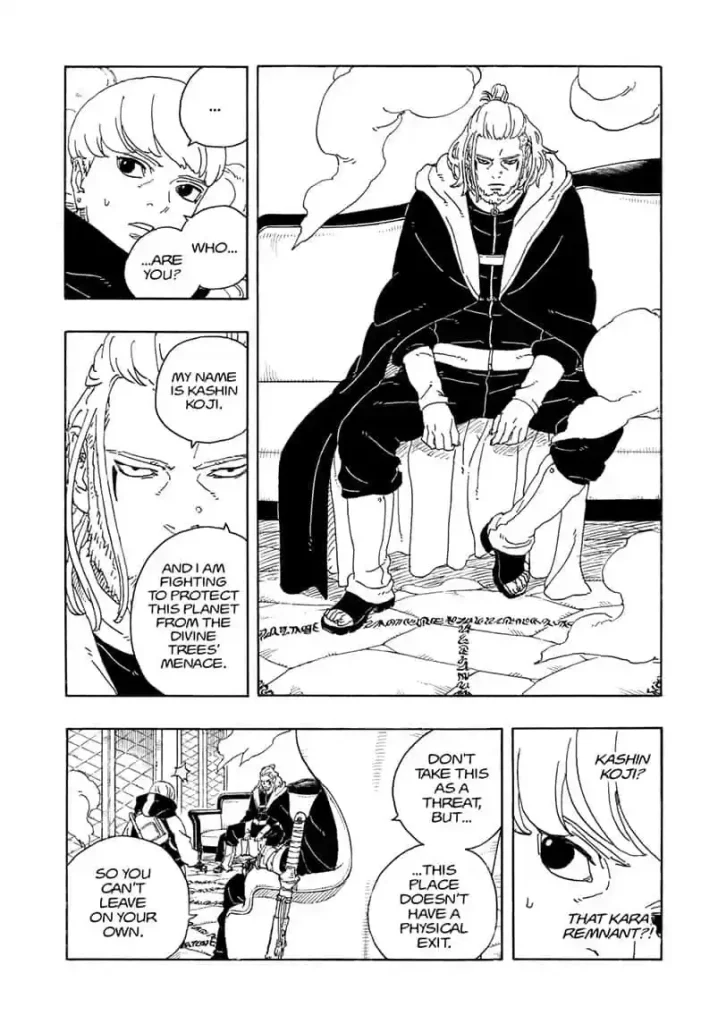
Enoene finds himself summoned to the hideout where Kashin Koji sits on a couch, introducing himself and getting straight to the point about preventing a god tree from harvesting a chakra fruit. As Inojin recognizes Kashin Koji likely from Konoha’s data files on the Kara members from part one, Boruto speaks up, making it clear that while he isn’t planning on threatening Inojin, the young Yamanaka has nowhere to run.
Boruto’s portrayal in this scene is particularly striking—he’s shown channeling his inner Sukuna, sitting with his face against his closed fist, watching Inojin closely. Given the timing coming after the question about liking Himawari, Boruto’s intimidating demeanor gives flashbacks to meeting the fathers and big brothers of high school girlfriends. However, Boruto’s intention here isn’t about scaring off someone who likes his sister—it’s about the planet’s survival.
The Shinju’s Book Club: Understanding Emotion and Desire
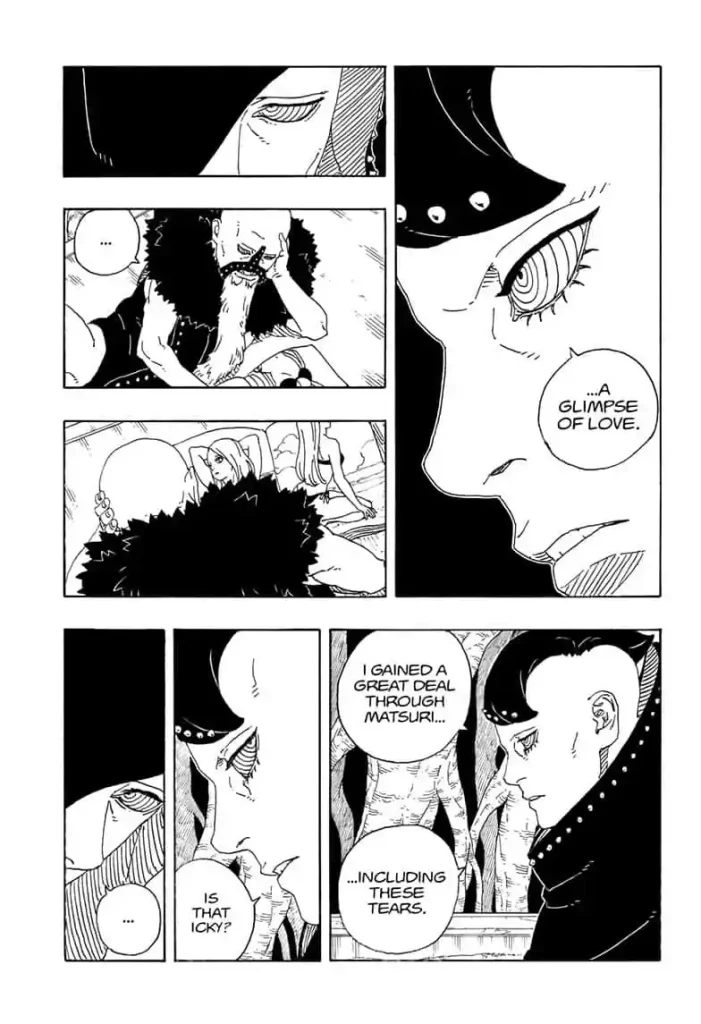
Jura’s Quest for Understanding Love
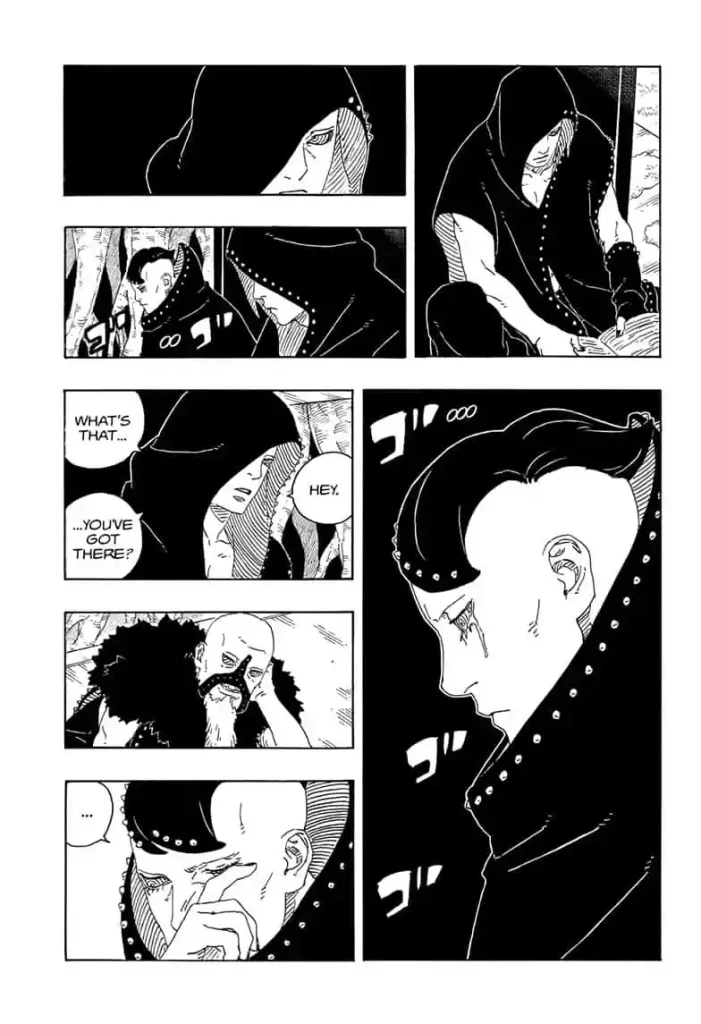
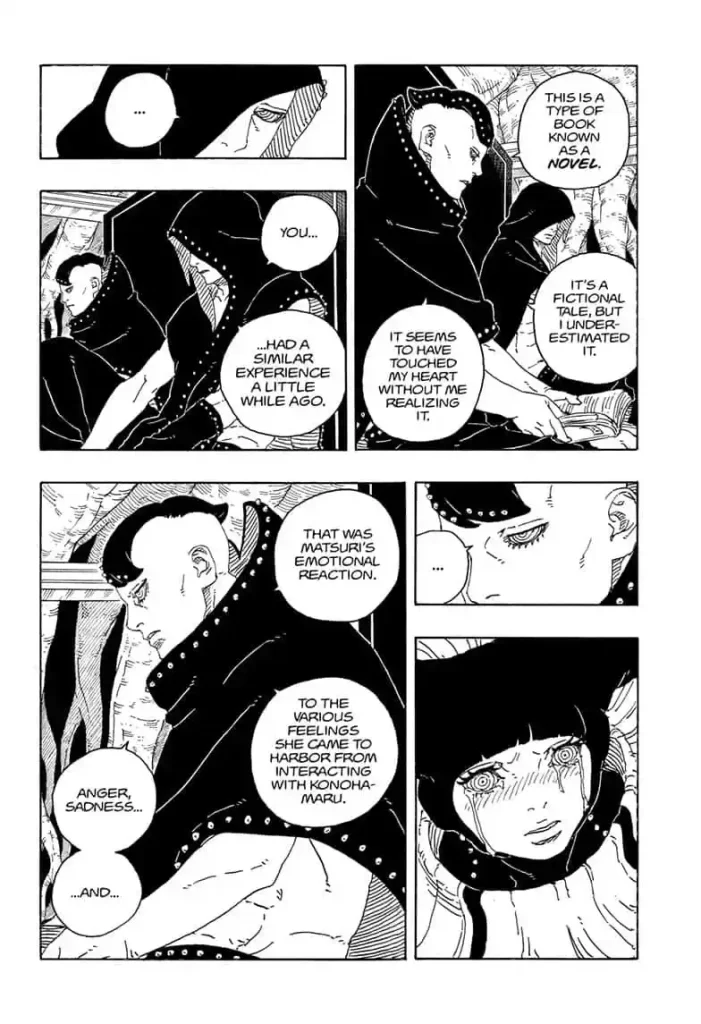
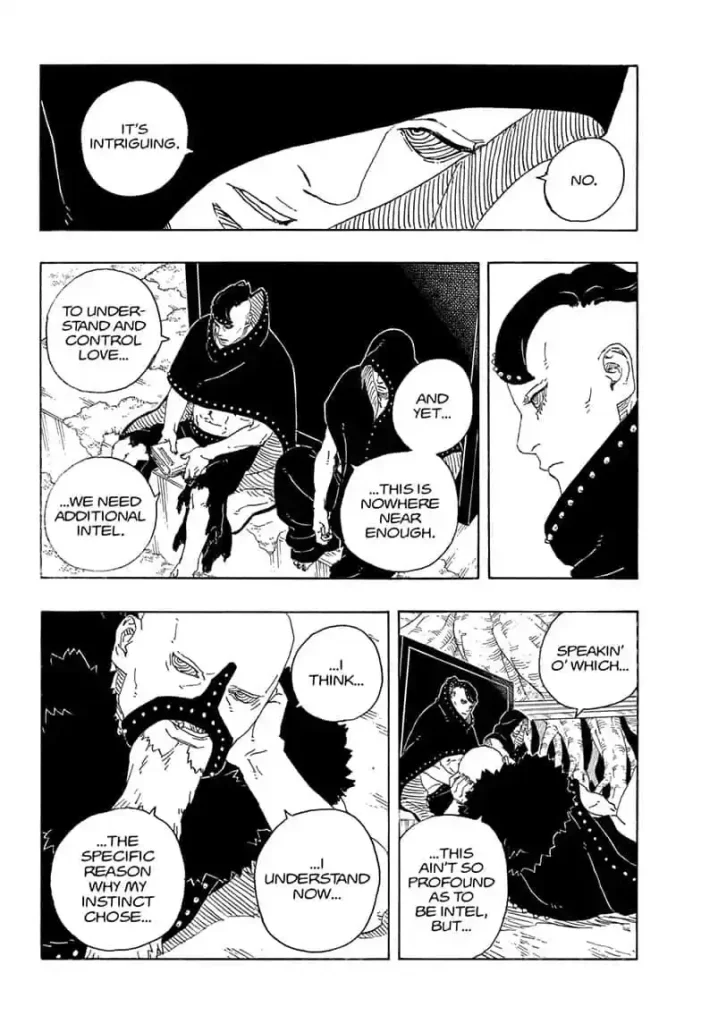
Meanwhile, back in the Ten-Tails’ hideout, we witness an fascinating scene that resembles a book club meeting. Hidari is reading a book, while Jura is shedding tears while reading a novel, saying he’s underestimated this genre of fiction as he tries to learn more about the emotion of love.
Jura reveals crucial information about what happened during the Matsuri versus Konohamaru fight. He explains that Matsuri felt multiple emotions that trace back to Konohamaru: anger, sadness, and a strong sense of love that was there briefly. Due to this connection, Jura experienced those same feelings, which explains why he shed tears.
Mamushi’s Disturbing Obsession
While this emotional learning is occurring, Mamushi is engaged in his own form of “reading”—but it’s the type that Master Roshi from original Dragon Ball would appreciate. He’s looking at swimsuit models in a magazine, focusing on their physical attributes with disturbing intensity.
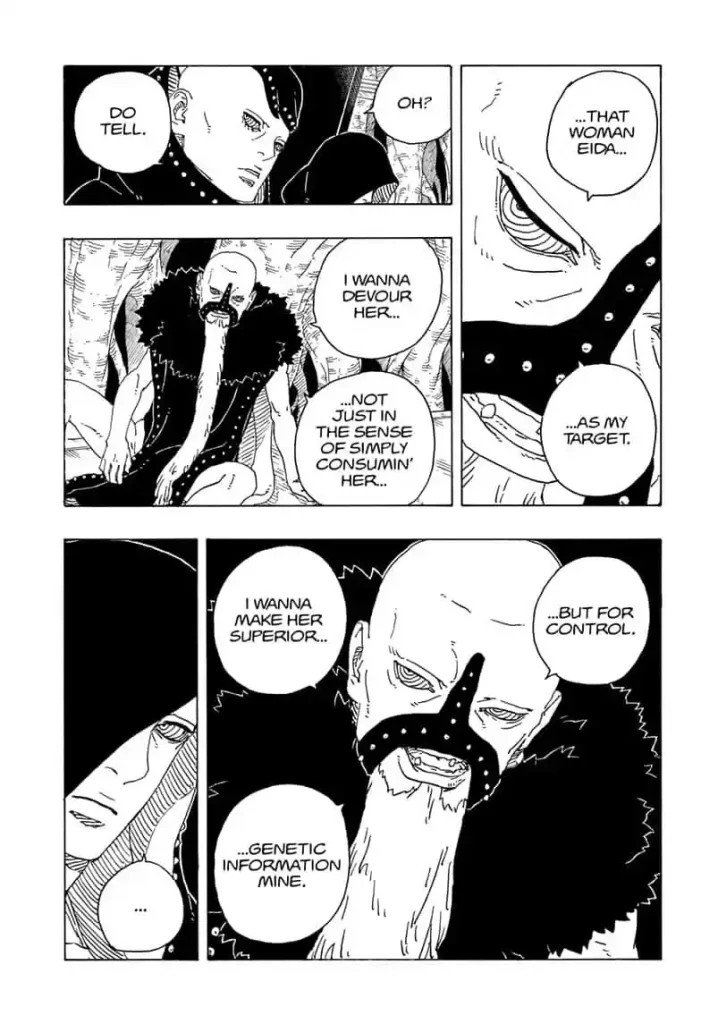
As Mamushi indulges in this behavior, Jura states that everything he’s read wasn’t enough for him to truly understand love and that he needs more information. However, Mamushi interjects with a chilling declaration: “Hey, fam, information, that shit’s overrated.” He reveals that Ada is his target, and his intentions go far beyond simple attraction—he wants to control her, make her his, and consume her genetic information.
Mamushi’s grin while speaking gives off the same predatory vibes that Master Roshi displayed when looking at teenage characters in the original Dragon Ball series. This disturbing obsession is a direct byproduct of him being created from Bug’s chakra—someone who was in love with Ada and lusted over her because of omnipotence. While Bug was the creepy old man too scared to openly express his desires, Mamushi represents that same person without any inhibitions or shame.
The Deeper Meaning: What the Shinju Represent
Mirrors of Human Desire
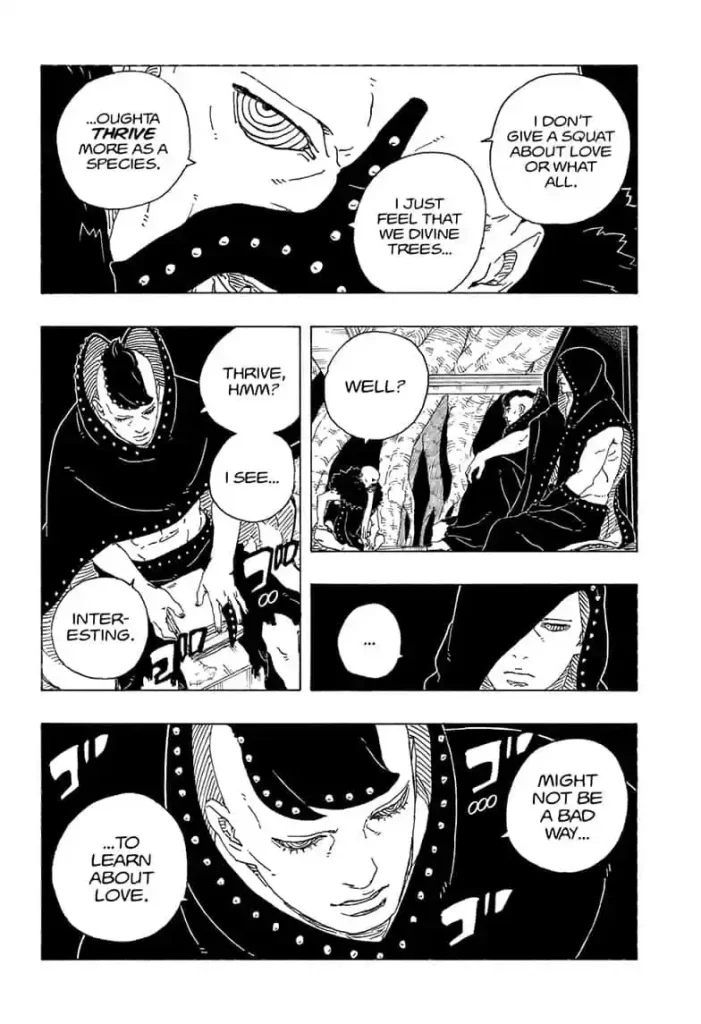
Mamushi’s behavior provides yet another sign of what the Shinju truly are. Those made from human chakra serve as direct reflections of the deepest desires and true personalities of the humans they’re created from. Even Jura, who isn’t made from a human, represents the Ten-Tails in human form. His seeking of knowledge mirrors how the Ten-Tails, once planted, seeks out all genetic information and chakra on the planet to create a chakra fruit.
In a very subtle way, Ikemoto is providing a dissection of what it means to be human through these antagonists, exploring the darker aspects of human nature and desire.
Political Crisis: The Feudal Lord’s Ultimatum
Shikamaru Under Fire
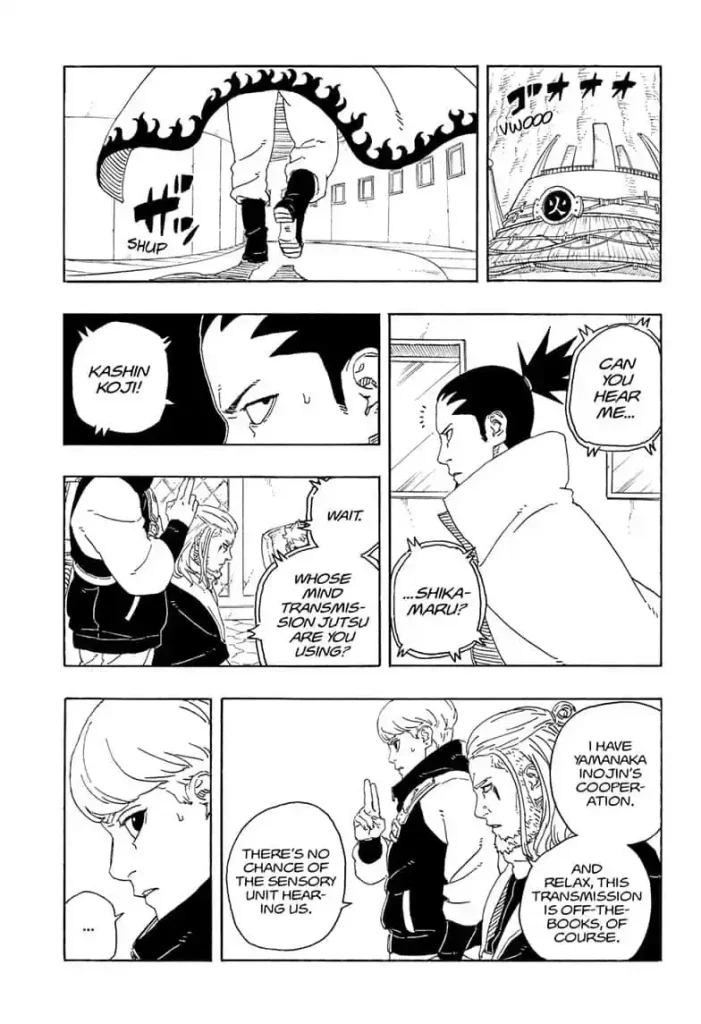
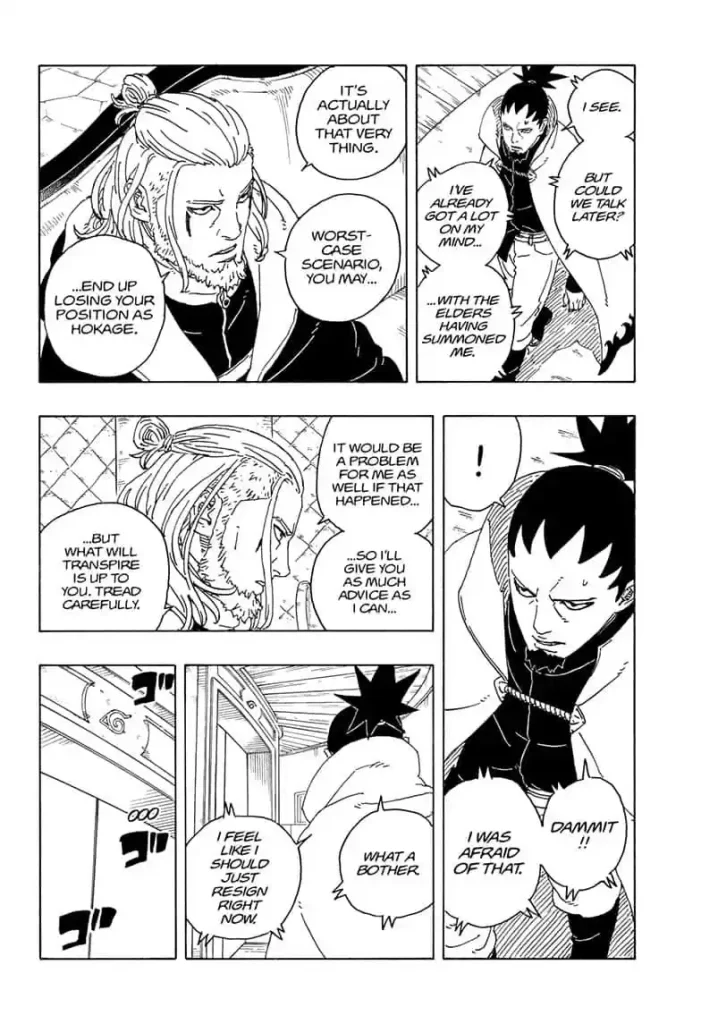
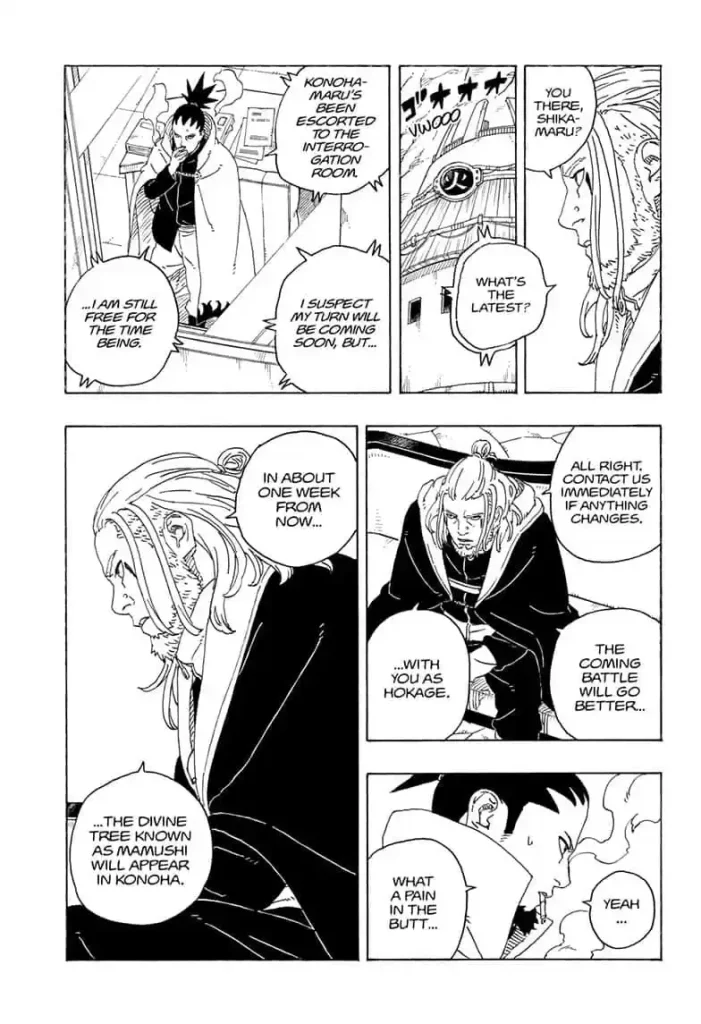
The chapter shifts to a critical political confrontation as Shikamaru approaches the conference room. Kashin Koji warns him through their psychic link that Shikamaru must emerge from this meeting still serving as acting Hokage, because if he’s removed, it will impact their opportunity to win the next battle against Mamushi, who is coming to seek out Ada in exactly one week.
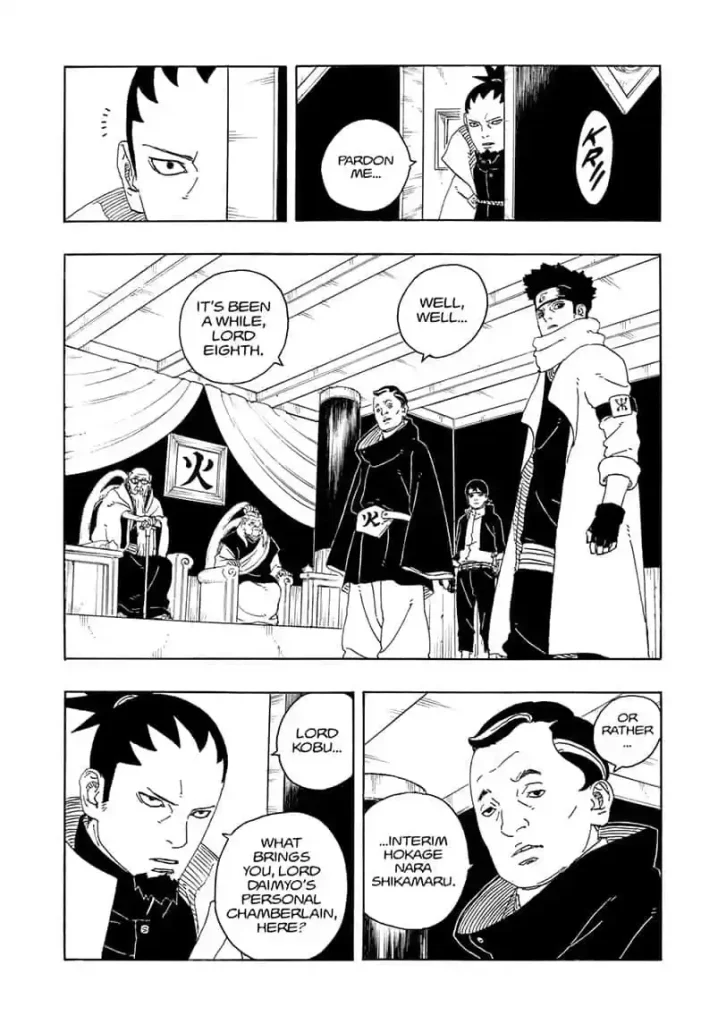
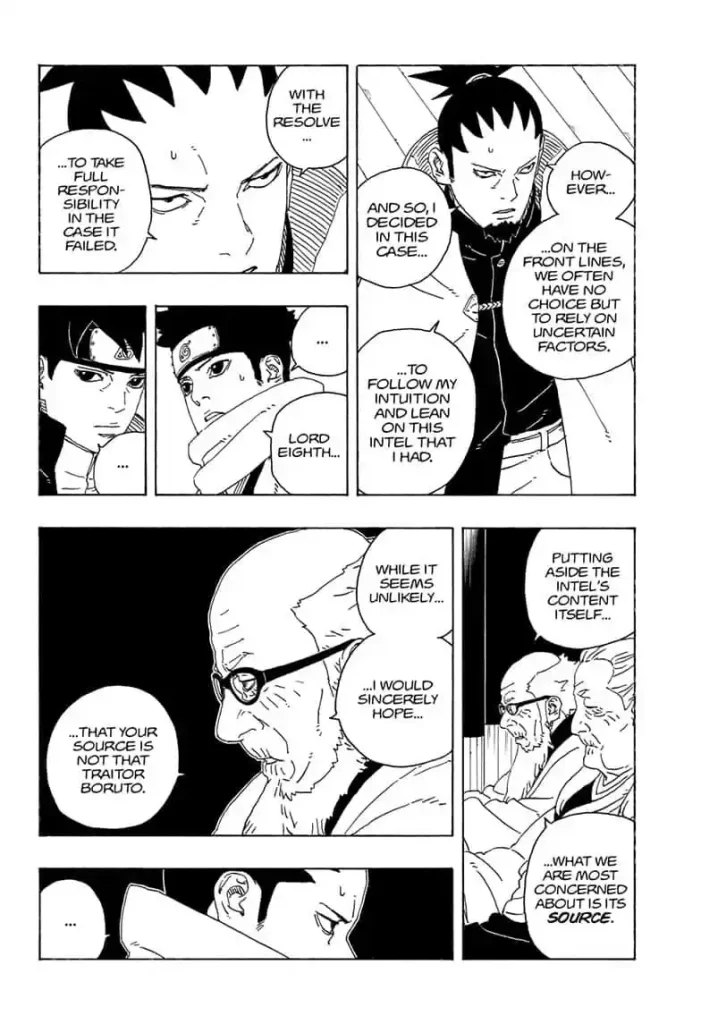
Upon hearing this, Shikamaru responds in typical fashion, calling it a drag and saying he has half a mind to resign—though obviously he can’t and never will. The meeting includes Kobu (aide to feudal lord Moko Ikio), Konohamaru, Sai, and the village elders, all with their eyes on Shikamaru.
The Threat of Defunding
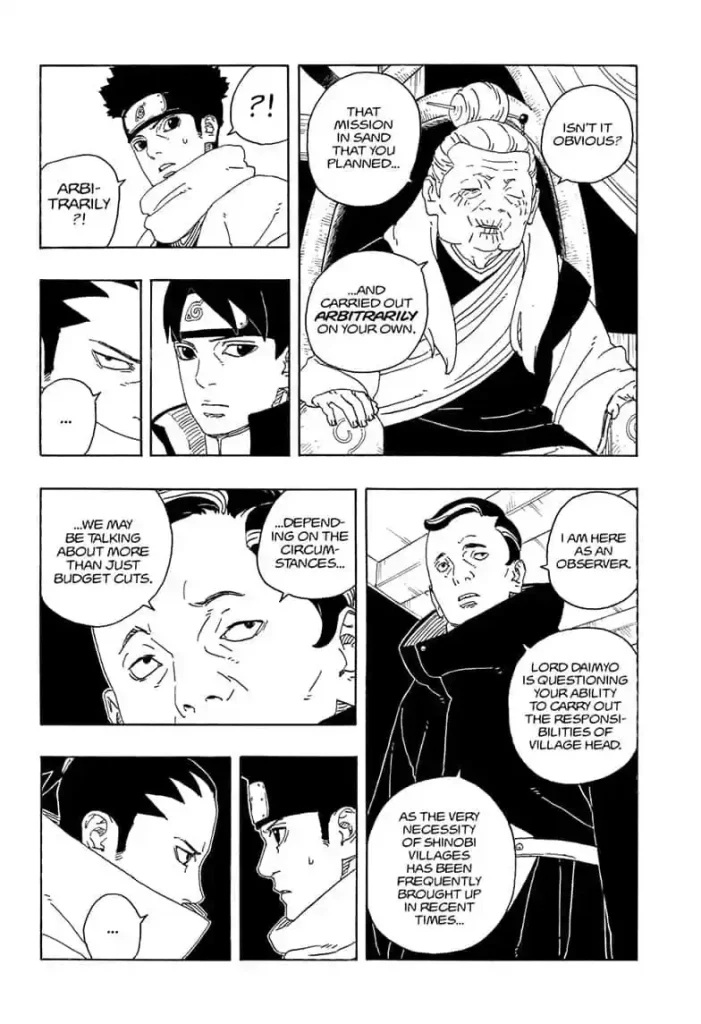
The political confrontation centers on Shikamaru acting unilaterally regarding the Sand Village mission. The elders’ role is to serve as official communication channels and advisory boards before the Hokage makes decisions that could impact the village. When missions fail, the blowback spreads beyond the village and reflects poorly on the feudal lord—the person who pays the bills.
Kobu delivers a devastating ultimatum: the feudal lord has questioned whether Shikamaru is the right person for the Hokage position and has even discussed whether they need to fund a shinobi village at all. This threat carries enormous implications for the entire ninja village system.
The Economics of Ninja Villages
This political crisis highlights a fundamental truth about shinobi villages: they have never turned enough profit to be self-sustaining, even during times of open warfare when Naruto grew up. Missions alone never generated sufficient income, which is why feudal lords bankroll ninja villages, often at a loss.
The traditional arrangement involves the feudal lord providing land, money, and resources to the ninja village, which in return serves as the military force protecting the feudal lord’s interests. In the Boruto era, with fewer missions during peacetime and shinobi service being optional, villages are bringing in even less revenue.
This conversation plants seeds for a potential future where, once the global Shinju threat is resolved, the feudal lord of the Land of Fire might disband the village entirely. Other feudal lords might follow this precedent, as we’ve seen historical examples of cost-cutting measures in the ninja world.
Shikamaru’s Tightrope Walk
Defending His Actions
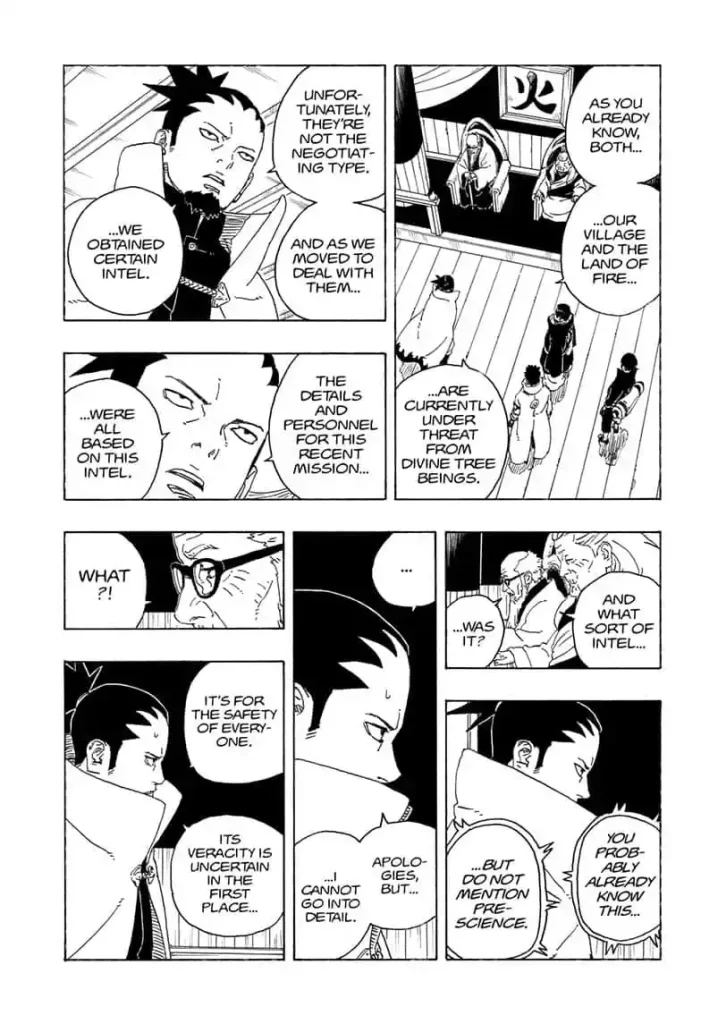
Faced with this political minefield, Shikamaru walks a tight line in his response. With Kashin Koji instructing him to avoid mentioning the Ten-Tails, Shikamaru explains that he ordered the mission based on solid intelligence and was willing to accept any ramifications if it had failed. He did what he believed was in the village’s best interest due to the widespread threat of the Shinju.
The Boruto Question
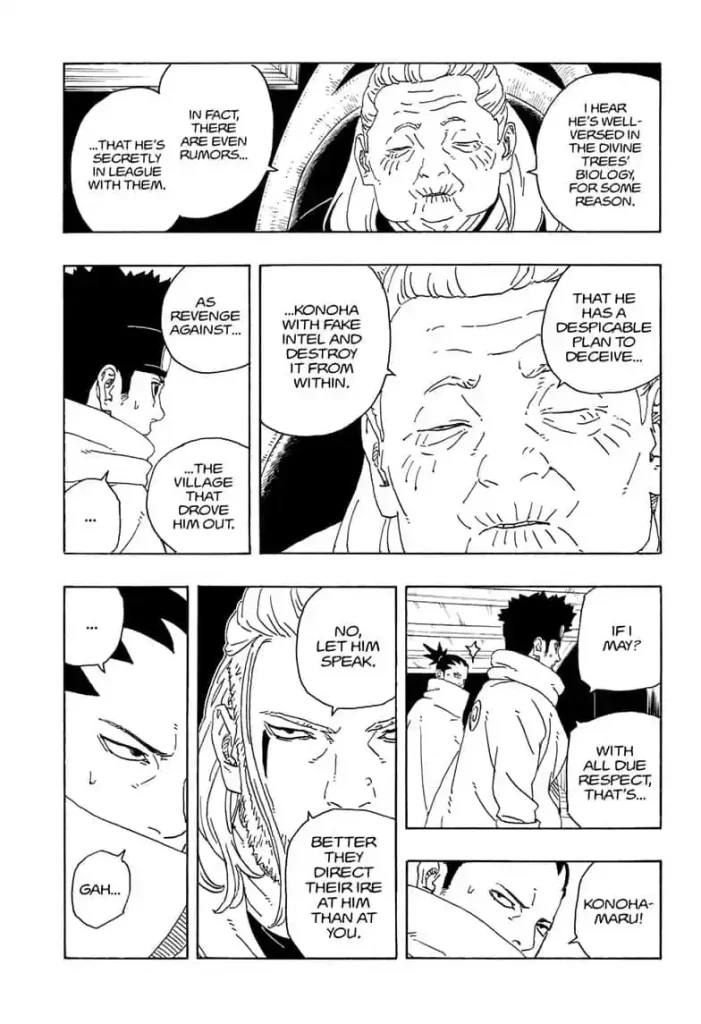
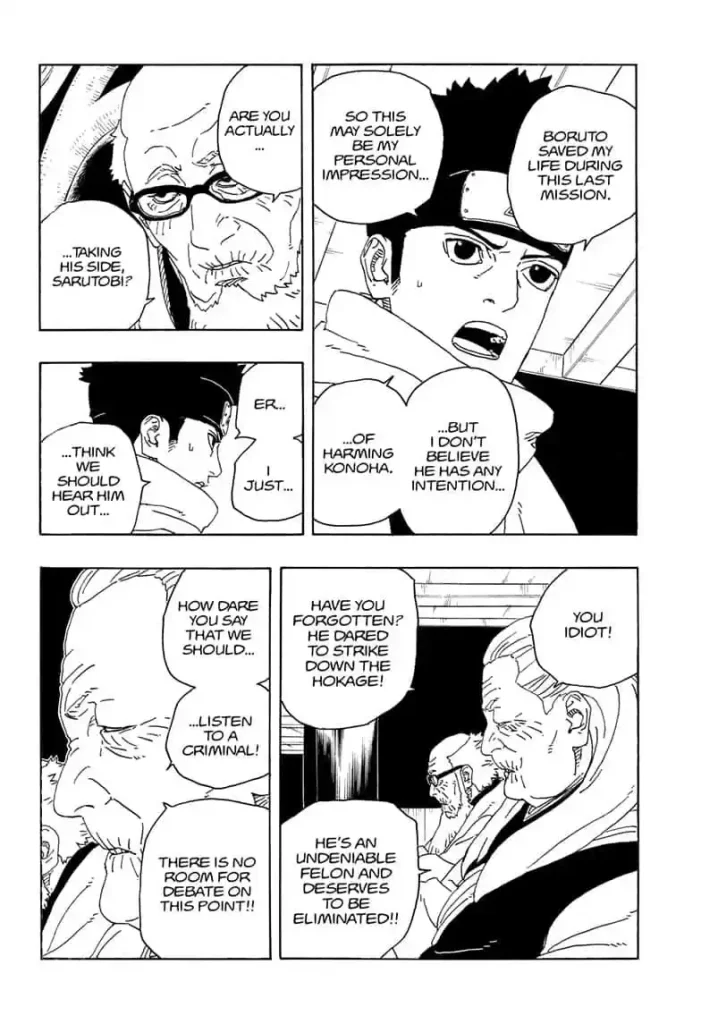
The elders directly ask whether Boruto was Shikamaru’s source of intelligence, raising the possibility that Boruto is actually working with the Shinju and making a fool of Konoha for revenge. Konohamaru quickly tries to defend Boruto, stating that Boruto saved his life and fought for them during the mission.
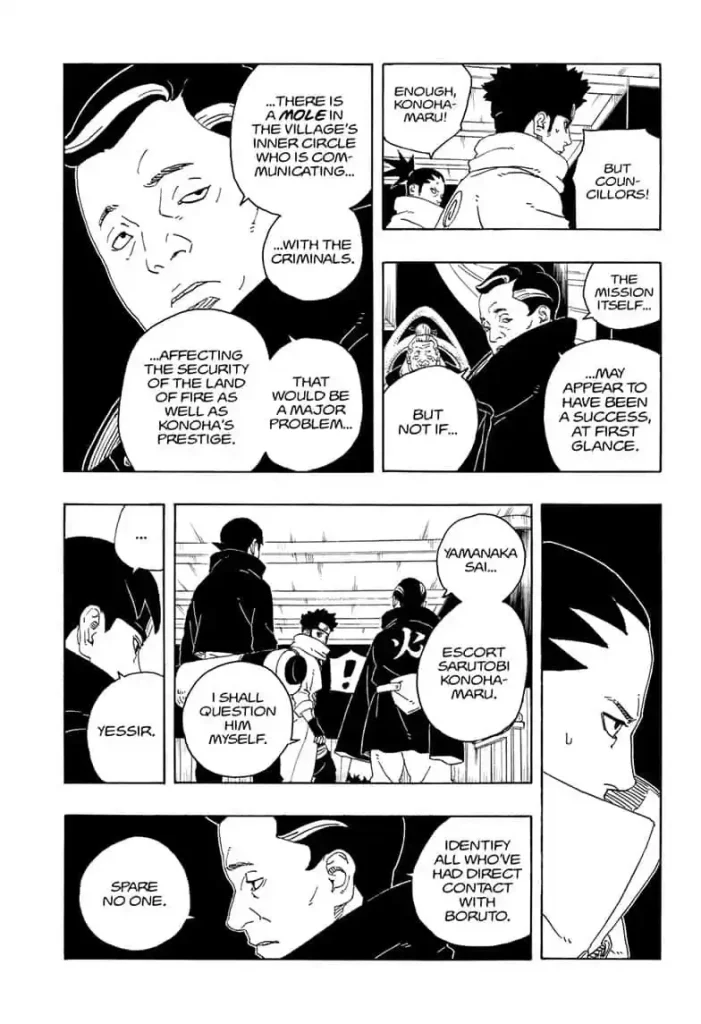
As this unfolds, Kashin Koji orders Shikamaru to “let Konohamaru fall on that sword for you—he’s a pawn.” This directive shows just how dire Shikamaru’s situation has become. The more scrutiny he faces, the more likely he is to be removed from power, which Kashin Koji cannot allow.
The Elders’ Message
The elders call Konohamaru a fool for trusting Boruto, reminding him that Boruto killed the Seventh Hokage, who was both a close friend and rival. However, there’s a deeper, unspoken message being conveyed. These 91-year-old elders remember what happened 22 years ago when the 69-year-old Third Hokage was killed by Orochimaru.
By mentioning a traitor killing a Hokage to Konohamaru—the grandson of a Hokage—they’re making him subconsciously think about his grandfather, as if saying: “You of all people should have no sympathy toward a Hokage killer. Your grandfather who raised you and your rival were both killed by traitors.” They’re patronizingly telling him that Boruto must be executed without debate.
The Investigation Begins
Kobu announces that he will begin interrogating everyone who has had conversations and interactions with Boruto, seeking to identify the mole inside the village who has clearly been helping him. This development makes Shikamaru’s confident words from Chapter 4—when he told Kawaki that he would know if anyone in the sensory unit was working with Boruto—now seem ironic, as Shikamaru himself is under fire.
Deep inside his mind, Shikamaru must be hoping that Ino doesn’t turn informant, because she literally knows everything. With Kashin Koji now forcing Inojin to help them, if Ino says the wrong thing, she could put her son in danger as well. This raises the possibility that Kashin Koji grabbing Inojin might have been a defensive play.
Breaking the Rules: The Mind Transmission Jutsu
Enoene’s Moral Struggle
Back in Orochimaru’s abandoned hideout, Inojin humorously points out that using the mind transmission jutsu breaks all the rules that the Yamanaka clan has established for the sensory unit. He asks if this is something they do regularly, prompting an expression from Boruto that suggests he’s thinking: “Dude, you’re already helping us, and now you’re asking if we break rules?”
Kashin Koji reminds Inojin that since they’re being hunted, obviously they break rules, stating the obvious: “You’re already involved in this, so there’s no point in asking about rule-breaking.”
Boruto’s Gentle Approach
Boruto tries to soften the situation by reminding his former friend that the Shinju are enemies who don’t play by rules either. They must take whatever measures possible to defeat them, essentially telling Inojin to “follow your own heart.” He knows this isn’t the time to worry about rule-breaking.
This causes Inojin to remember his failed attempt to save Himawari from Jura, where he almost joined the “donut club” founded by characters like Ace, Rengoku, and Rin Nohara (referring to characters who were fatally pierced through the chest).
Growing Tensions: Boruto vs. Kashin Koji
The Philosophical Divide
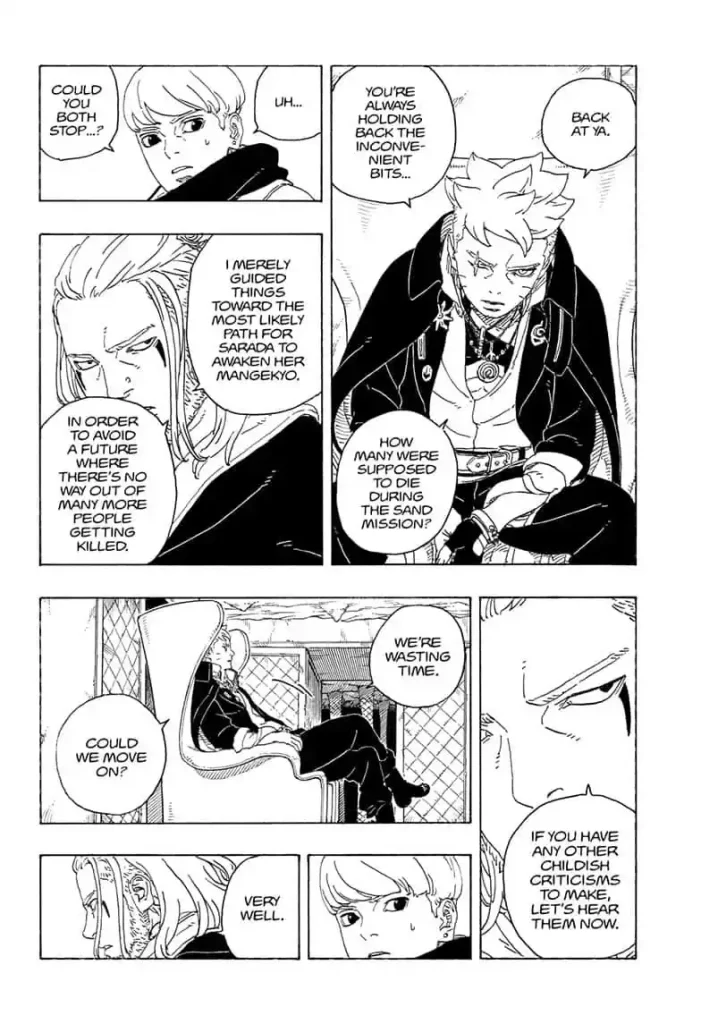
With renewed resolve, Inojin prepares to help, but we witness growing tension between Kashin Koji and Boruto. Kashin Koji asks Boruto if he made his deal with Momoshiki, and when Boruto won’t answer, Kashin Koji calls him a brat. Boruto fires back, saying Koji has no right to be angry when he doesn’t tell Boruto everything he needs to know.
The Greater Good vs. Individual Life
Kashin Koji defends his approach, explaining that he’s operating on a need-to-know basis like Nick Fury from Marvel Comics. He reveals that setting up the Sand Village mission the way he did caused Sarada to reawaken her Mangekyo Sharingan, and her power will be used to prevent massive casualties in the future—making Yodo’s death worthwhile.
Boruto grows annoyed and leans back in his chair, telling Kashin Koji to get on with it. This exchange represents a fascinating character study of nature versus nurture. Boruto, raised by Naruto and Hinata, values human life above all else and would never be okay with sacrificing people, even for the greater good. This mirrors Naruto’s declaration to Obito that he wouldn’t let any of his friends die.
Boruto represents the best aspects of his parents: their unyielding faith and resolve. Kashin Koji, on the other hand, represents humanity’s darker side—survival at any cost. As Jiraiya’s clone, he doesn’t share Jiraiya’s moral values, having been nurtured by Amado to view situations in calculated terms.
The Battle Plan Against Mamushi
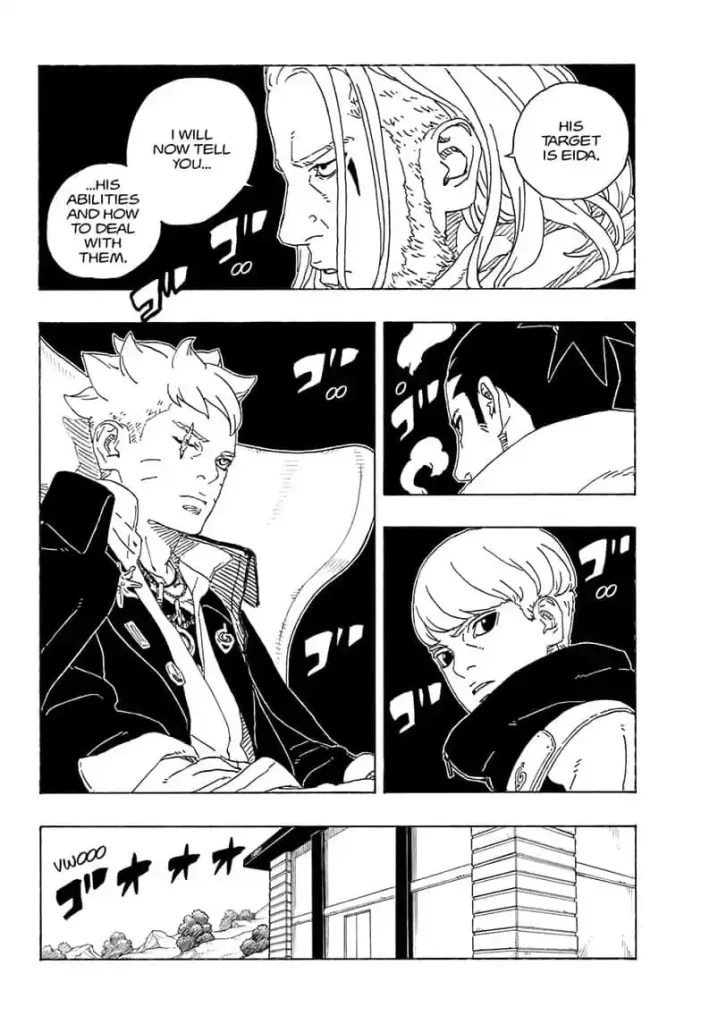
Following this philosophical clash, Kashin Koji provides Shikamaru with a complete breakdown of Mamushi’s powers and appears to give him an off-screen plan for defeating Mamushi, similar to how he stressed that Konohamaru’s only chance against Matsuri was to catch her off guard.
Ada’s Moment of Truth: The Love Confession Discussion
Girl Talk and Genuine Connection
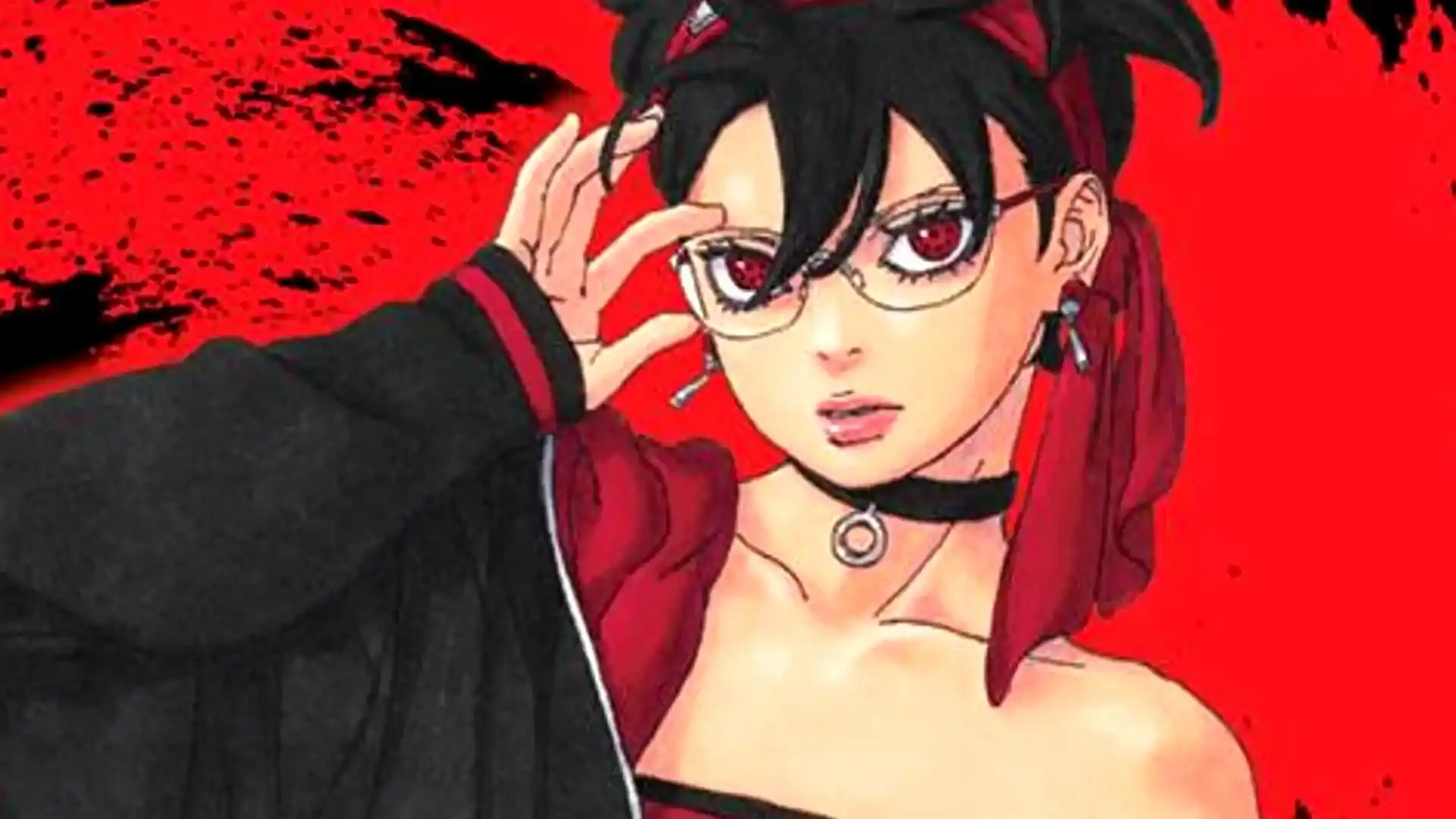
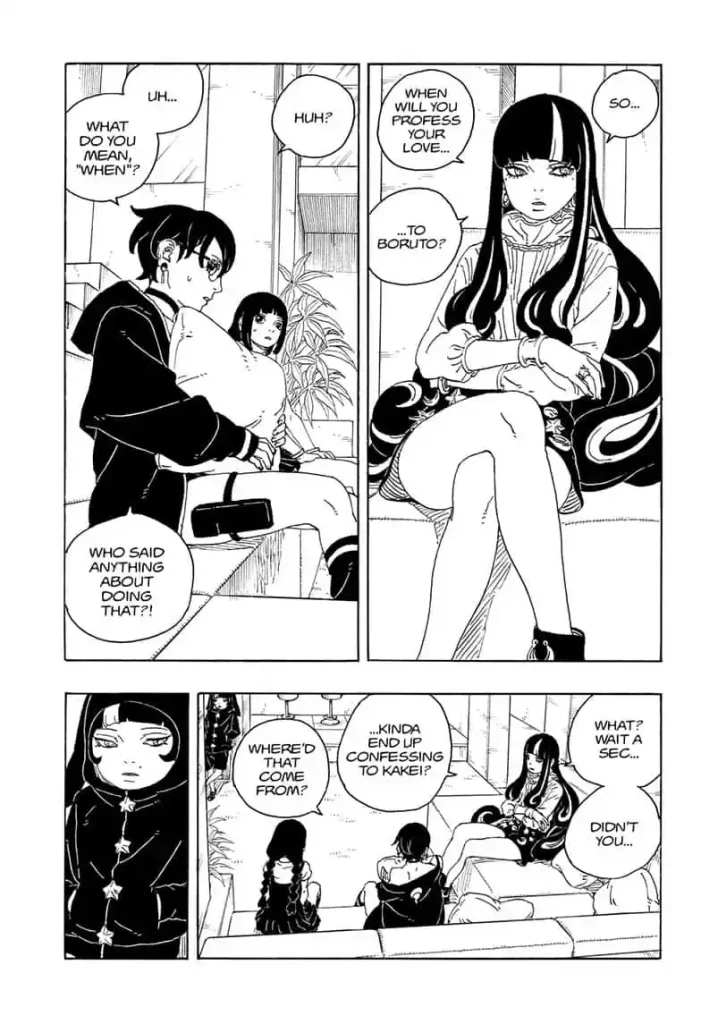
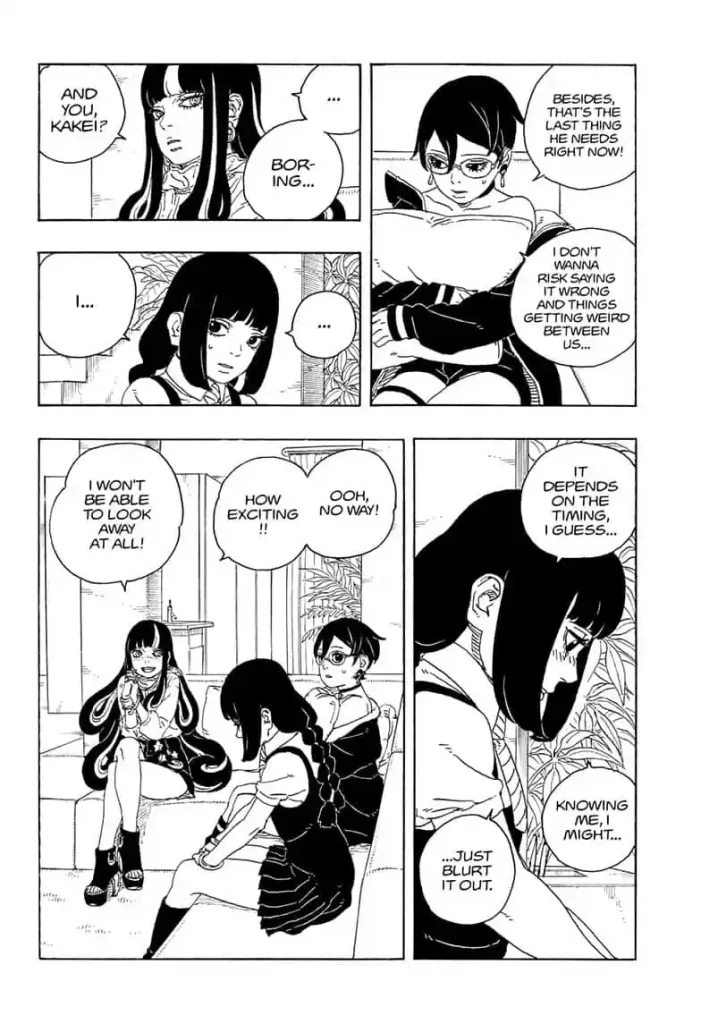
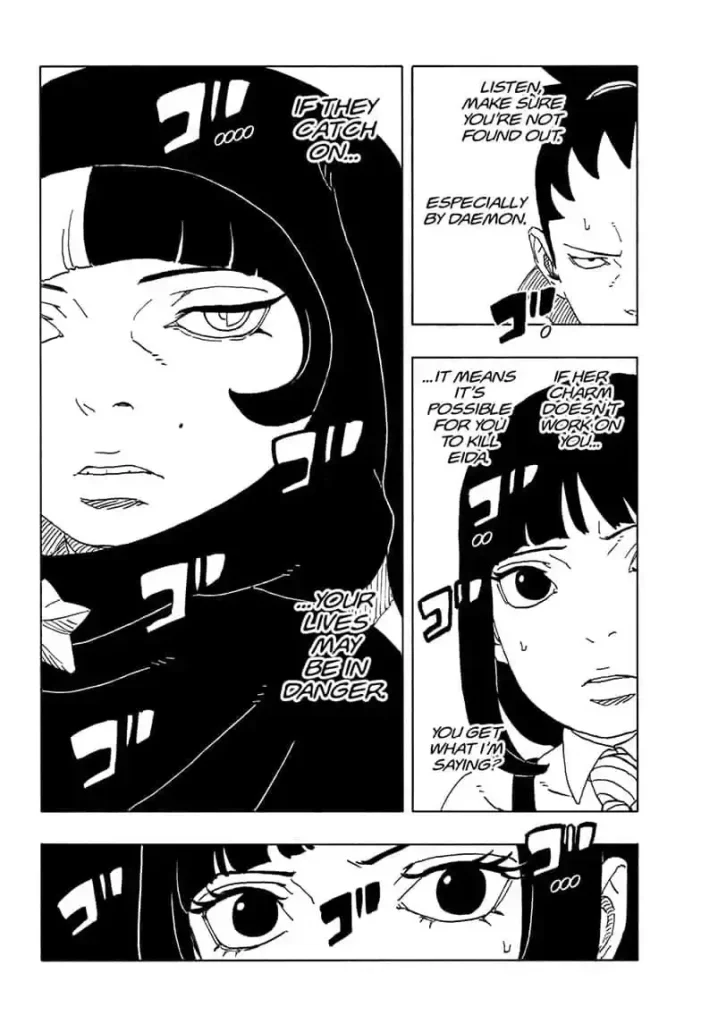
Another battle begins heating up, but it starts as another calm before the storm. Ada asks Sarada if she’s going to confess her love to Boruto, while Damon watches her response closely from a distance. Sarada explains that now really isn’t the time because Boruto has too much to deal with, and it would only make things weird between them.
After Ada voices her displeasure with this response, Sumire admits she feels the same way but might confess suddenly. This causes Ada to blush across her entire face—she’s fangirling because, for the first time in her life, she’s experiencing genuine female connection and friendship.
The Slip-Up That Changes Everything
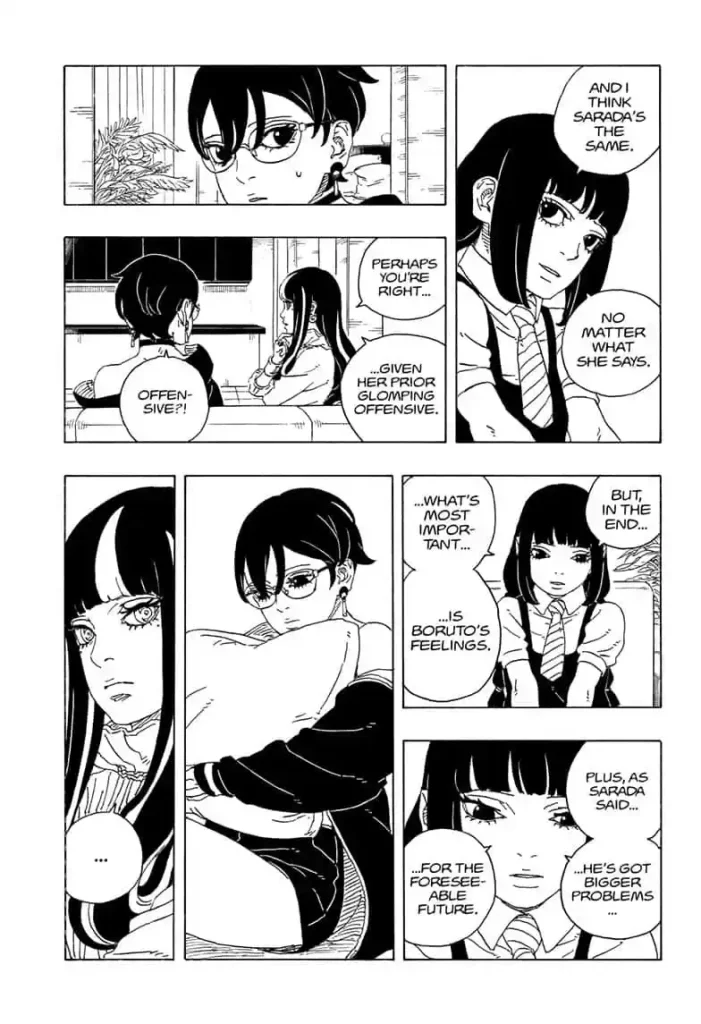
However, as Ada listens to their conversation and recalls how Sarada jumped into Boruto’s arms, Sumire makes a critical slip-up by saying, “What really matters in this moment is Boruto’s feelings.” The light bulb goes off in Ada’s mind.
Looking back to Part One, when Ada was in bed with Sarada and Sumire trying to have girl talk, she attempted the same conversation about love and was disappointed. She saw both girls pretending to be infatuated with her because of her omnipotence ability, which turns people into admirers when they’re in her presence. Ada was hurt that neither girl could discuss their true feelings.
The Confirmation of Immunity
Now, both girls are completely open about their feelings while in Ada’s presence. This isn’t the first time this has happened—it occurred briefly in Chapter 16 when Sumire had her emotional breakdown and started confronting Sarada, with Boruto being the root cause.
Ada has likely suspected this for a long time, as evidenced by her question in Chapter 1 of Two Blue Vortex when she asked if the girls were really under her spell, since they were concerned about Boruto’s safety when they should have only cared about her.
The Foreshadowing Connection
This moment was foreshadowed in Chapter 16. After Ada’s conversation with Kashin Koji and Shikamaru, she repeats the words that Kashin Koji’s toad said: “Follow your own heart.” Her eyes are drawn to look toward Sumire, who is feeling bad about having confronted Sarada.
Ada’s omnipotence ability, which is constantly active when people are around her, was first described as having the power to “control hearts” because she enchants the hearts of those around her. When Ada thought to herself “Follow your own heart, huh?” it was foreshadowing this very moment.
Sumire’s emotional breakdown showed concrete evidence that what Ada suspected about the girls was true—they might have been immune to her power.
Damon’s Threat: The Mask Finally Cracks
The Pressure Applied
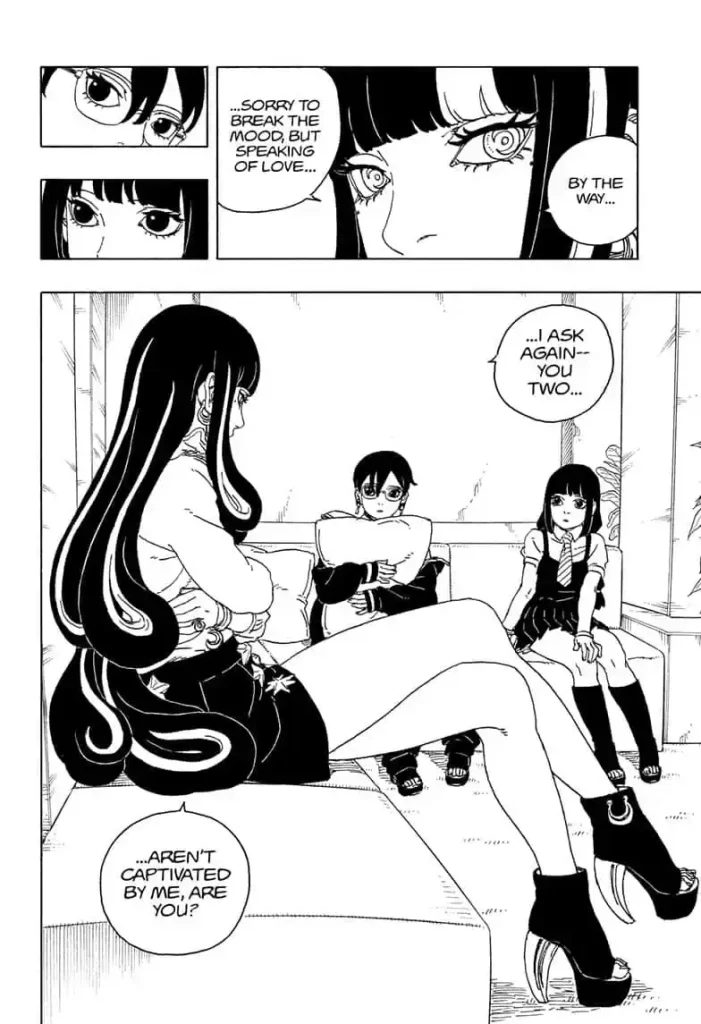
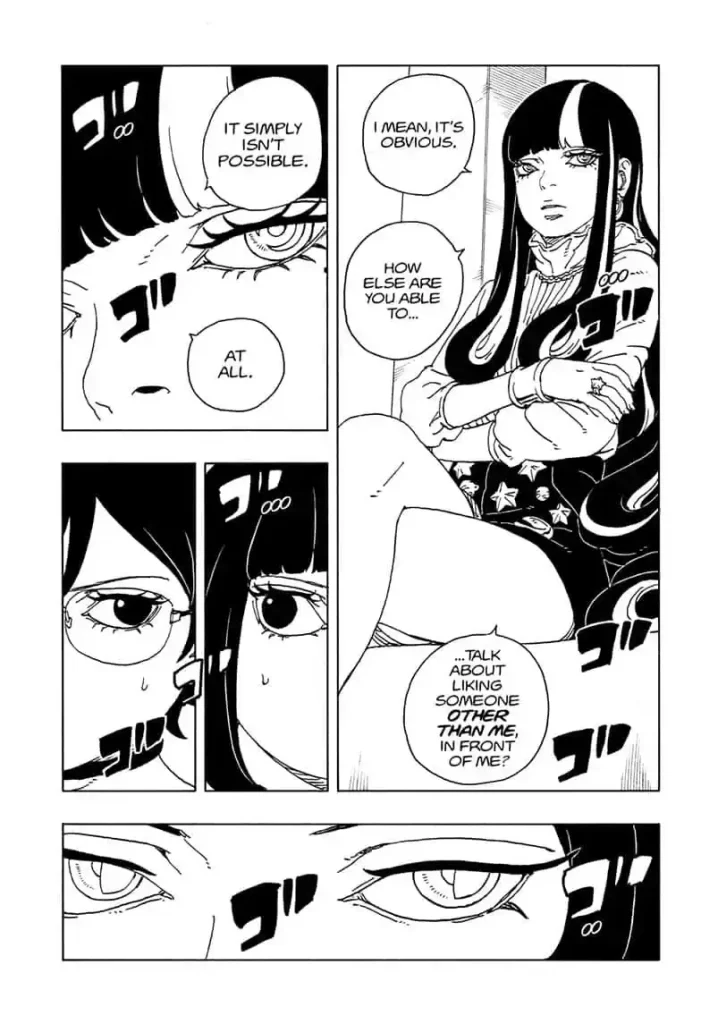
Ada takes their silence as an opportunity to apply pressure, while Damon gives both girls the same narrowed look he gave Code before defeating him decisively. Ada states that they made a mistake without even realizing it: they talked about being in love with someone while standing in her presence, which should never have been possible.
When Ada is in front of someone, she becomes their sole focus, and they become infatuated with her. That’s why she looked so annoyed in Part One when trying to have love talk with the girls about Boruto and Kawaki—two very similar scenarios but with completely different responses.
The Binary Nature of Her Power
There’s no gray area with Ada’s ability: you’re either infatuated with her or you’re not. Had the girls been outside her presence like in the previous chapter, it wouldn’t have been an issue. She specifically mentions “while I’m in front of you” before pausing, emphasizing the importance of proximity.
To illustrate: if Shikamaru is in front of Ada or interacting with her, he becomes her admirer. Even if Temari were in a bathing suit right in front of him, she’d be a distant second—only Ada matters. However, if Shikamaru is home alone with his wife, Temari is his primary focus because Ada isn’t present. Ada understands this mechanism completely, and now the girls understand it too.
Damon’s Swift Action
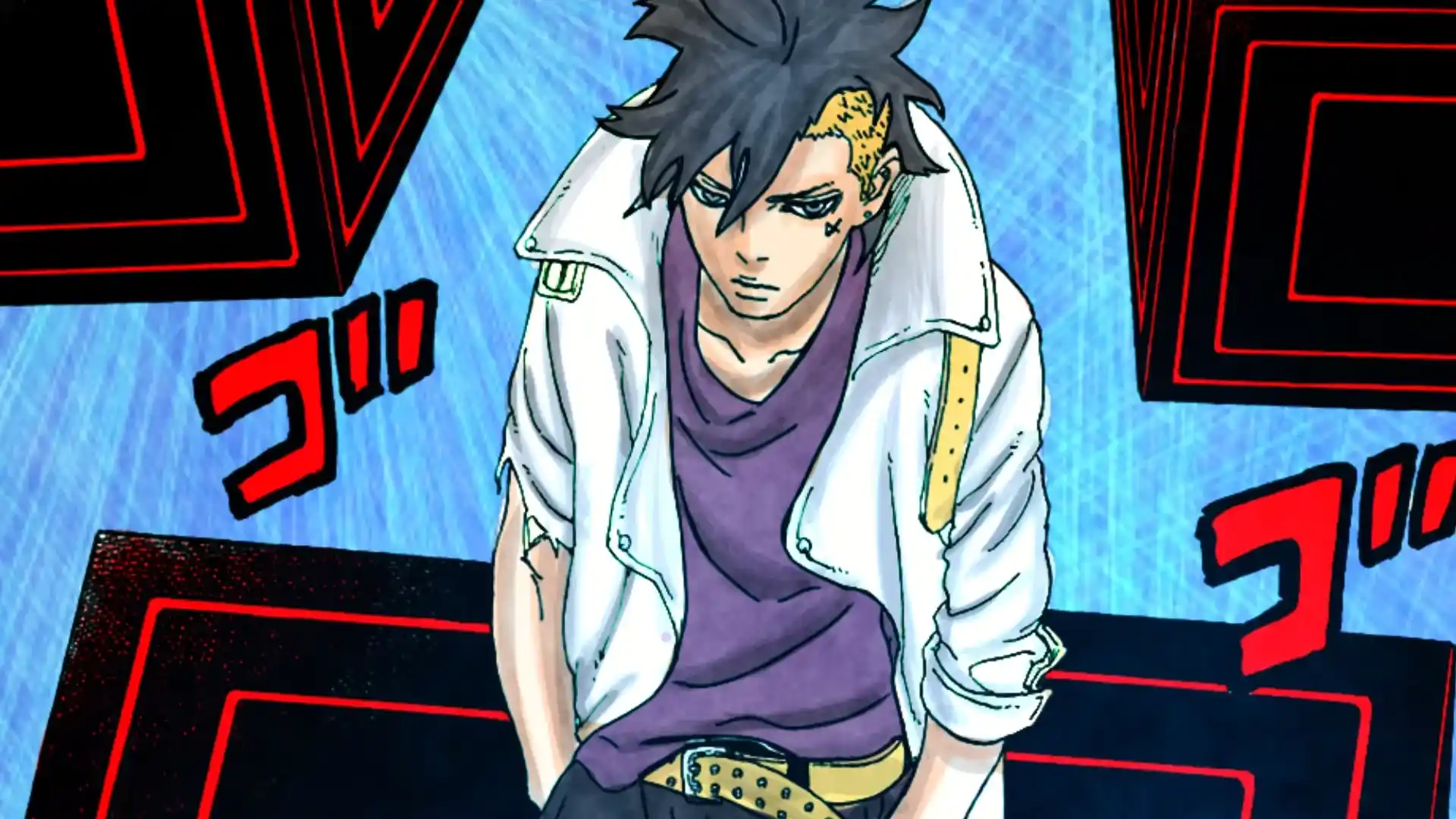
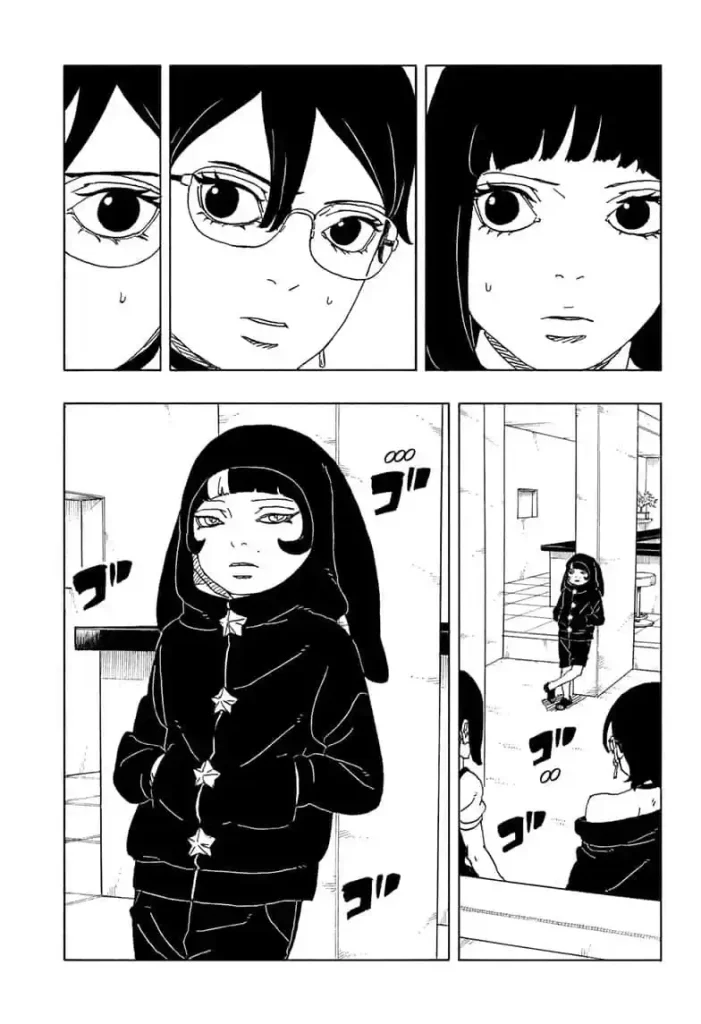
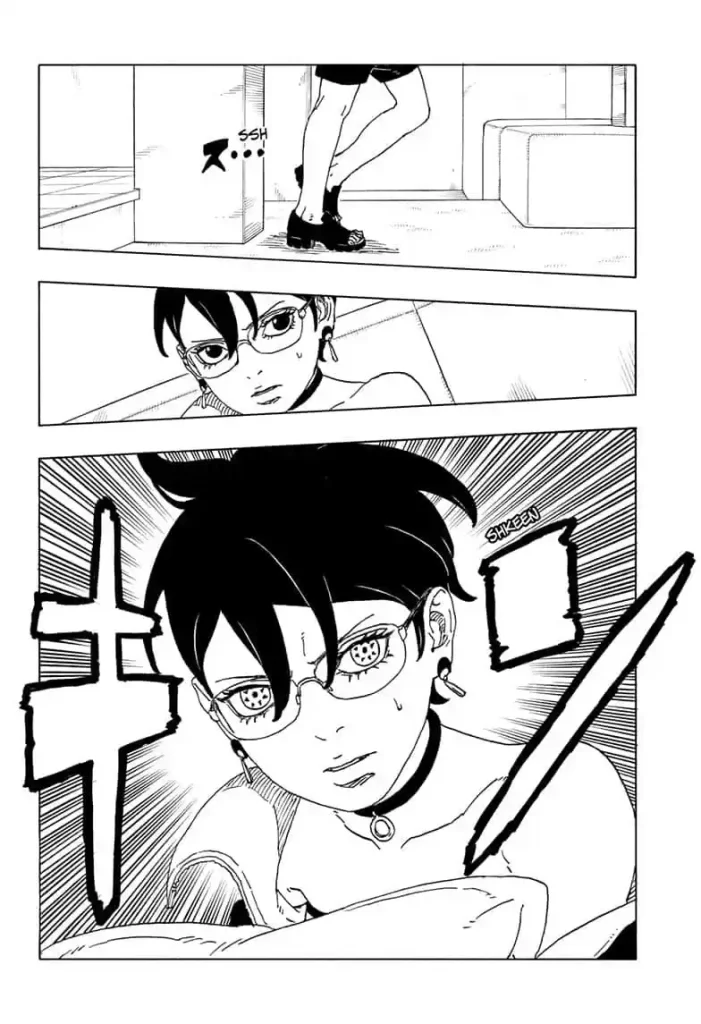
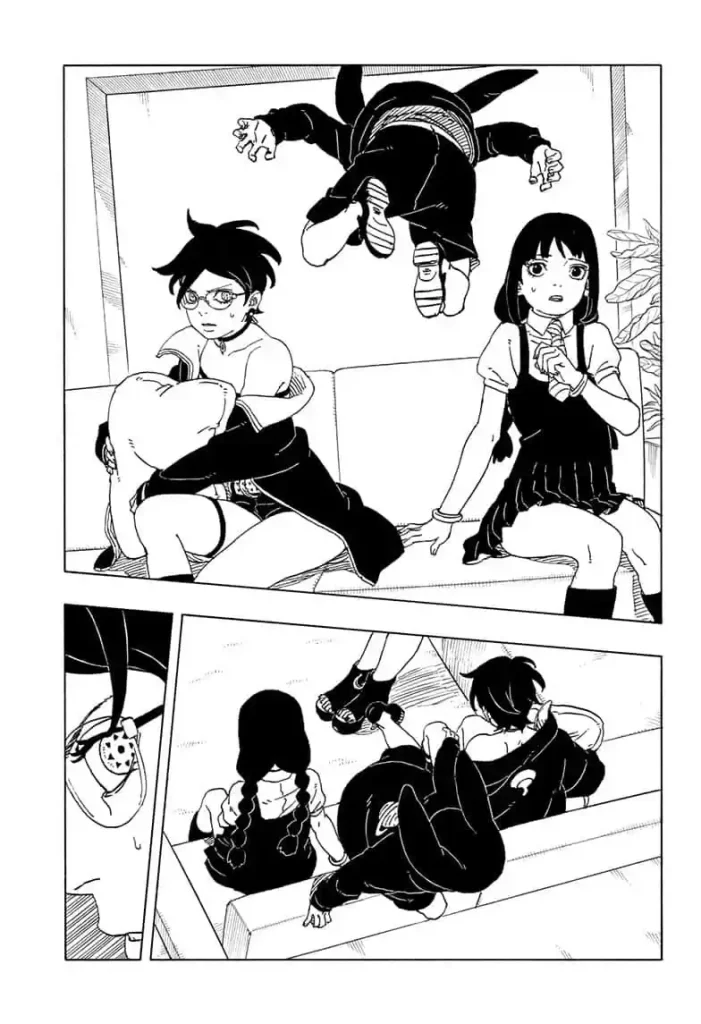
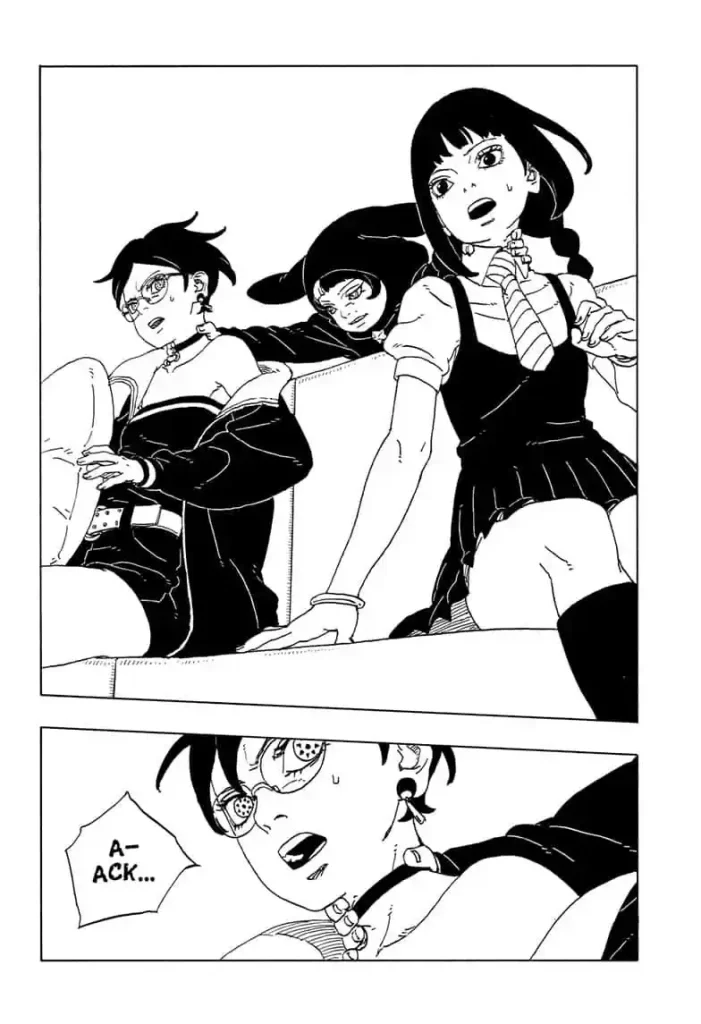
Damon has heard enough. He goes from leaning against the wall to jumping toward them. Sarada quickly activates her Mangekyo Sharingan, but it doesn’t matter—Damon blitzes both girls. As Sarada turns her head, Damon lands on the other side of the couch before she can properly react, demonstrating a huge disadvantage for both girls. It’s easier for Damon to surprise them when someone like Sarada needs time to stand up and respond.
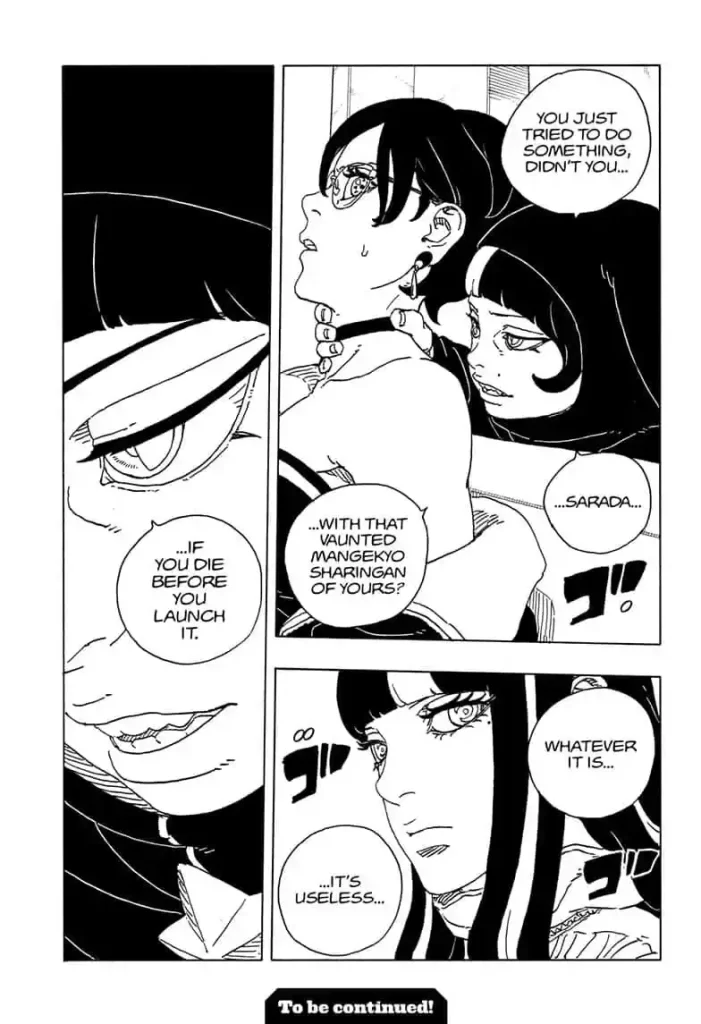
Damon grabs the back of their necks with his hands around their throats and issues a chilling warning to Sarada. Despite having the Mangekyo Sharingan, she’ll never get the chance to use it. He can say this confidently because his palms are touching Sarada, and he managed to get the drop on her without using his full power.
The moment she tries to use her second Mangekyo Sharingan power, it will be reflected back onto her with greater intensity, potentially killing her.
The Chapter’s Climactic End
The chapter concludes with Ada watching the situation unfold as Damon makes his threats to the two girls who slipped up and exposed themselves. After three long years of deception, the mask has finally cracked, and the Chekhov’s gun has been fired.
Shikamaru had warned that they couldn’t get caught, because if they did, Damon would attack them since they pose a threat to Ada. Now we wait for the second Chekhov’s gun to fire: Ada’s genuine need for female companionship and ordinary friendship.
What’s at Stake: Two Possible Outcomes
The question now becomes: does the girls’ comfortable openness with Ada cause her to value what could be the very friendship that Sarada extended to her in Part One? Or does this three-year deception make her angry enough to unleash Damon’s full power against them?
This pivotal moment represents the culmination of multiple storylines and character arcs that have been building throughout the series. The political crisis threatening Konoha’s existence, Inojin’s betrayal of his village to protect Himawari, the growing tension between Boruto and Kashin Koji over moral philosophy, and Ada’s discovery of the girls’ immunity to her power all converge in this explosive chapter.
The Storm Approaches
Chapter 26 of Boruto Two Blue Vortex masterfully balances multiple narrative threads while building toward what promises to be catastrophic consequences. Every character finds themselves at a crossroads, forced to make decisions that will reshape not only their personal relationships but potentially the entire shinobi world.
The chapter’s title, “The Calm Before the Storm,” proves prophetic as we witness tender moments between characters that quickly dissolve into life-threatening confrontations and political crises. With Mamushi set to arrive in one week, Damon threatening Sarada and Sumire, and the feudal lord considering defunding Konoha entirely, the storm that’s been brewing is finally ready to break.
For the answers to these burning questions and the resolution of these cliffhangers, we’ll have to wait for Chapter 27. But one thing is certain: the shinobi world will never be the same after the events that have been set in motion in this pivotal chapter. Boruto Chapter 27 reveals Ada’s omnipotence immunity, plants death flags, and raises Mimushi’s threat — spoilers, analysis, and what it means for Konoha.